5 Apify Alternatives for 2026: Cheaper Routes to the Same Web Data
Last updated: October 27, 2026 | Pricing verified from each vendor's own pricing pages on 2026-10-26 (raw captures on file). Method: research-only — I have not run production scrape workloads on any platform here; what follows is the pricing mechanics and the documented complaint record, not output benchmarks.
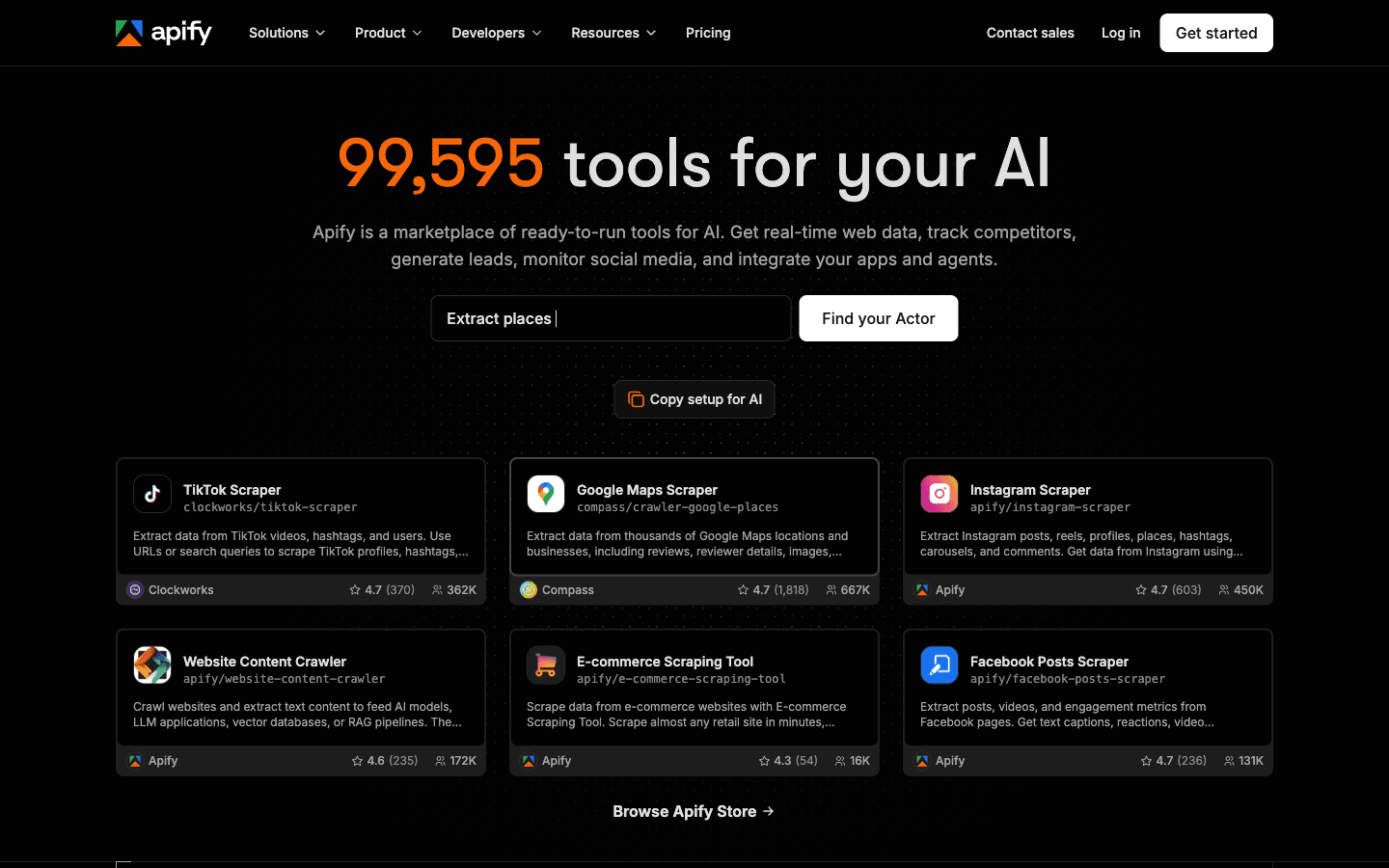
Apify is the biggest marketplace of ready-to-run scrapers and automation actors — 99,000+ of them, with a genuinely free tier ($5 of prepaid usage per month, no card). The reason people search for alternatives is what the bill looks like one tier up. On top of the plan you pay per compute unit, per Actor, per GB of residential proxy ($8/GB at the lowest rate), and per GB of storage and transfer. G2's aggregated complaint tags tell the same story from the other side: "Pricing Issues" with 88 mentions, "Expensive" with 87, "Steep Learning Curve" with 31.
Quick verdict, by persona: if your actual job is search-engine data, SearchApi at $40/mo replaces the Apify SERP actors with one predictable meter. If it's pulling data from SaaS tools you already use, NoCodeAPI is $12/mo. If it's storing and automating on collected data, Teable. If it's dashboards over that data, Jet Admin. And if you have a developer, Apify's own open-source library Crawlee gives you the scraping engine for $0 — which is either the best alternative or a confession that you should stay on the platform, depending on your team.
Why people leave Apify
the documented reasons are layered metering that's hard to forecast, proxy costs that scale with success, and third-party Actor quality that varies — not a lack of features.
The metering is the core complaint. A plan like Starter ($19/mo) includes $19 of prepaid platform usage at $0.2 per compute unit, where 1 CU is 1 GB of RAM for an hour. Store Actors price themselves and draw from the same balance. Residential proxies bill separately at $8/GB. Dataset storage and external data transfer meter separately. Add-ons like extra concurrent runs ($5/run) bill separately. Each line is documented on the pricing page — none of it is hidden — but the sum is a bill you model, not one you read. One 2026 Trustpilot review puts it plainly: "cost once you scale to large review volumes; pay-as-you-go adds up."
The second issue is trust in the catalog. Actors are published by third-party developers, so quality and pricing vary by author, and G2 reviewers mention spending real time just choosing between actors for the same source. Apify's Trustpilot profile also flags "Hasn't replied to negative reviews" — the company documents its platform meticulously and manages its review presence less so.
If you're hitting these walls, the alternatives below attack specific slices of the job, because that's what the market offers: nothing else packages marketplace + hosting + proxies the way Apify does.
The alternatives, by job
there is no single best Apify alternative — the right pick depends on whether you need SERP data, SaaS API access, a place to put the data, a UI on top of it, or raw scraping code you own.
1. SearchApi — for SERP data without the proxy bill
Developer: $40/mo for 10,000 searches ($4/1,000). Production: $100/mo drops it to $3/1,000. 100 free requests on signup, no card.
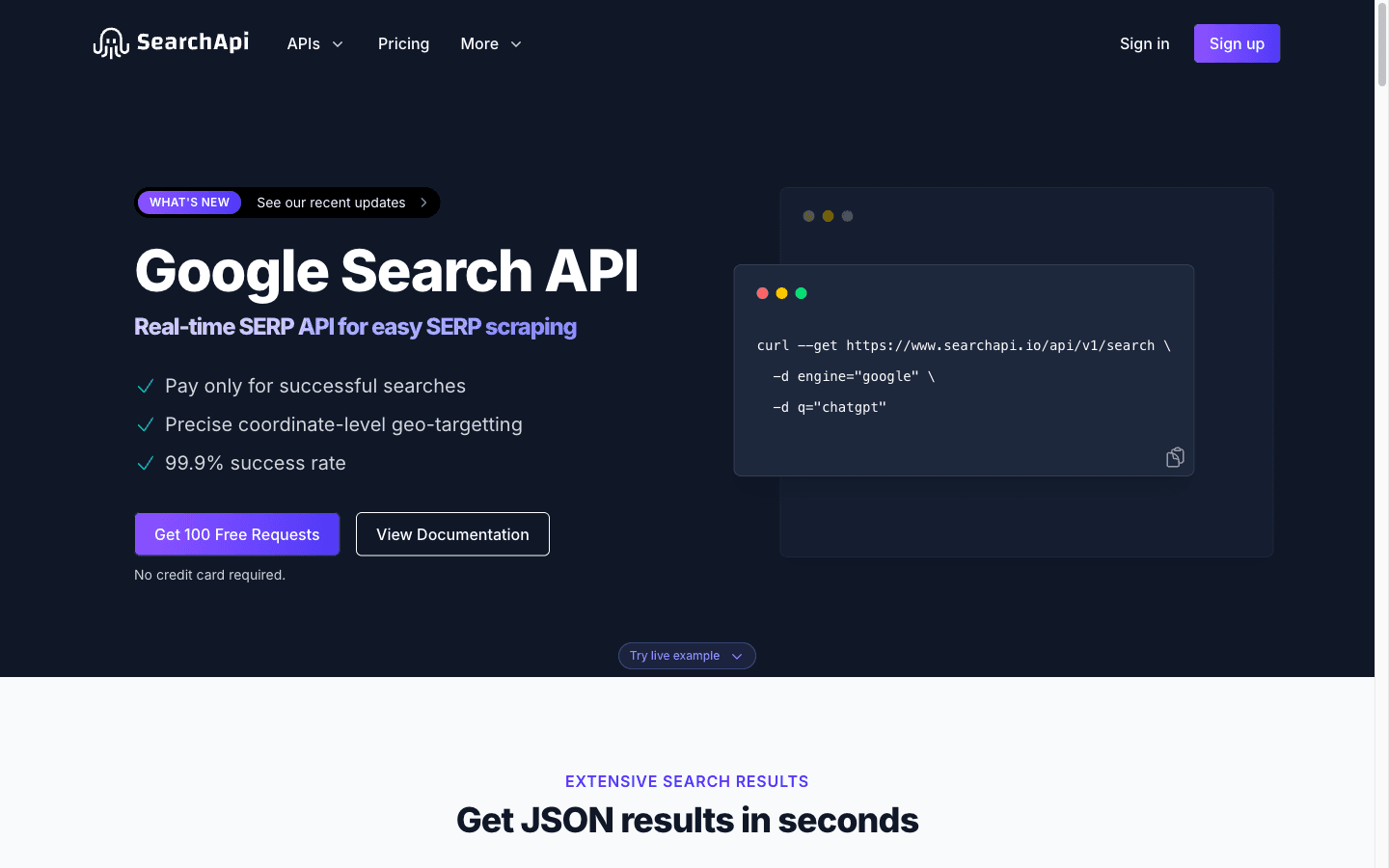
A large share of Apify Store traffic goes to Google/Bing/Maps scrapers. SearchApi sells exactly that output as an API: one request, one parsed SERP, 20M+ rotating proxies and AWS infrastructure behind it. The pricing is the anti-Apify model — you pay per successful search, and the FAQ states failed requests aren't charged. There's even a Legal Protection Guarantee (up to $2M, US law) covering how they collect the data.
The catch: rate limits cap you at 20% of your plan's credits per hour, so a 250,000-search Scale plan still burns at most 50,000/hour — big batch jobs queue. Pricing is published for the Google engine; other engines have separate rate cards you'll see at the dashboard. And cancel speed ("under 30 seconds" per the FAQ) is good, but the Trustpilot profile has zero reviews — sentiment evidence is G2-only.
Best for: rank tracking, keyword data, Maps results, and AI pipelines that need structured SERPs on a forecastable bill. Full breakdown on our SearchApi page.
2. NoCodeAPI — for SaaS data without writing scraper code
Personal: $12/mo for 50,000 calls across 5 integrations. Professional: $29/mo for 150,000 calls and 10 integrations. Free: 300 calls/mo.
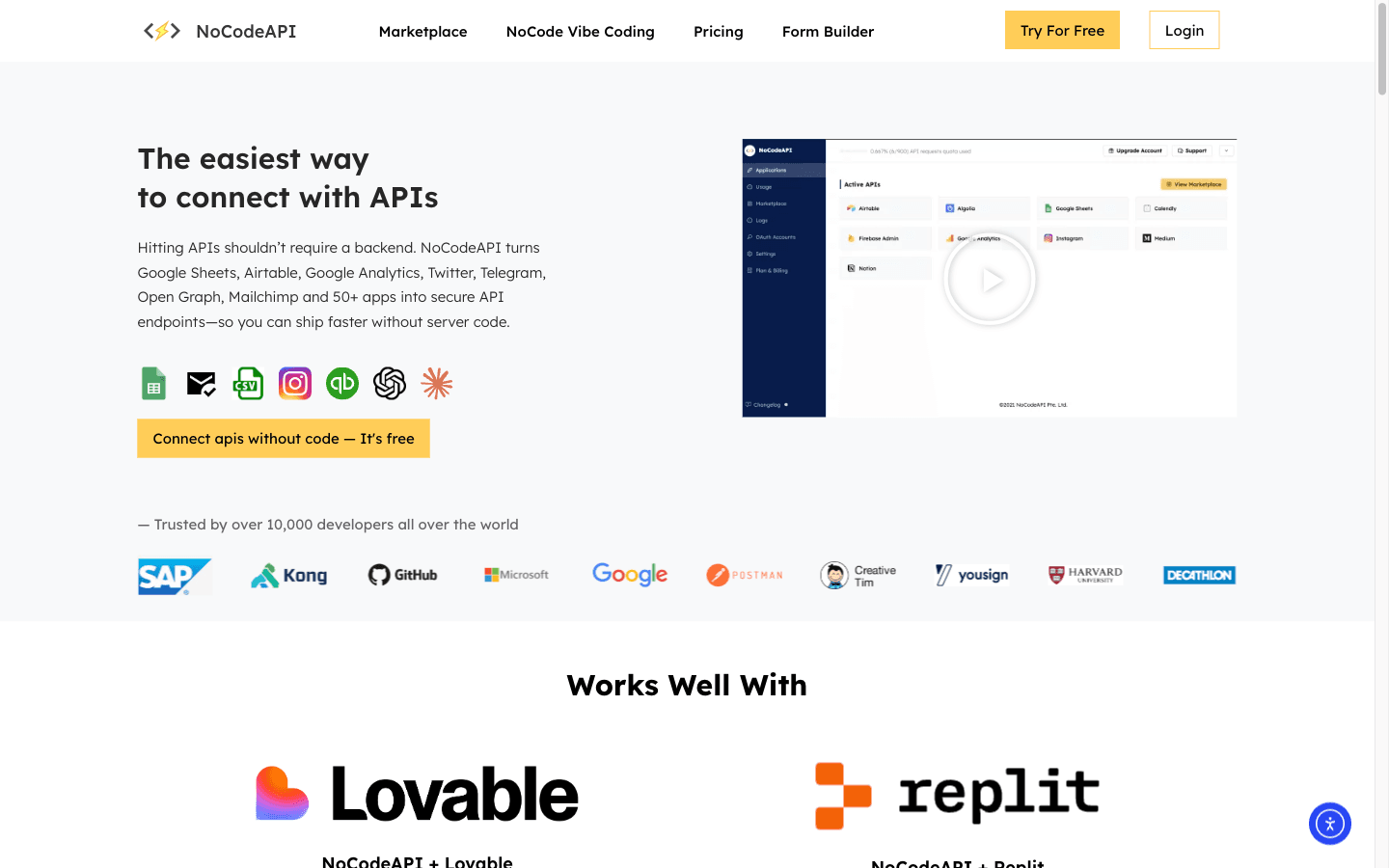
Half of what people use Apify for isn't scraping at all — it's "get my Google Sheets/Airtable/Stripe data into my app." NoCodeAPI wraps those third-party APIs into authenticated endpoints you call without managing OAuth, tokens, or servers, with caching on every call and encrypted key storage. The 10-day no-questions refund policy is unusually clean.
The catch: the marketing says one subscription opens the whole API library, but the pricing table caps integrations — 5 on Personal, 10 on Professional, unlimited only at $49/mo Business. Don't believe the homepage sentence over the table. The free plan pauses after one week of inactivity, which kills leave-it-running prototypes. And the review record is near zero: a 3.1 Trustpilot score from two reviews, one saying "Good when it works. Zero support when it doesn't."
Best for: developers and no-code builders gluing existing SaaS data into apps — not for scraping websites. Details on our NoCodeAPI page.
3. Teable — for the data layer after the scrape
Free: 1,000 rows. Pro: $13/seat/mo billed yearly ($24 monthly) for 250,000 rows and 25,000 automation runs. Business: $20/seat/mo for 1M rows.
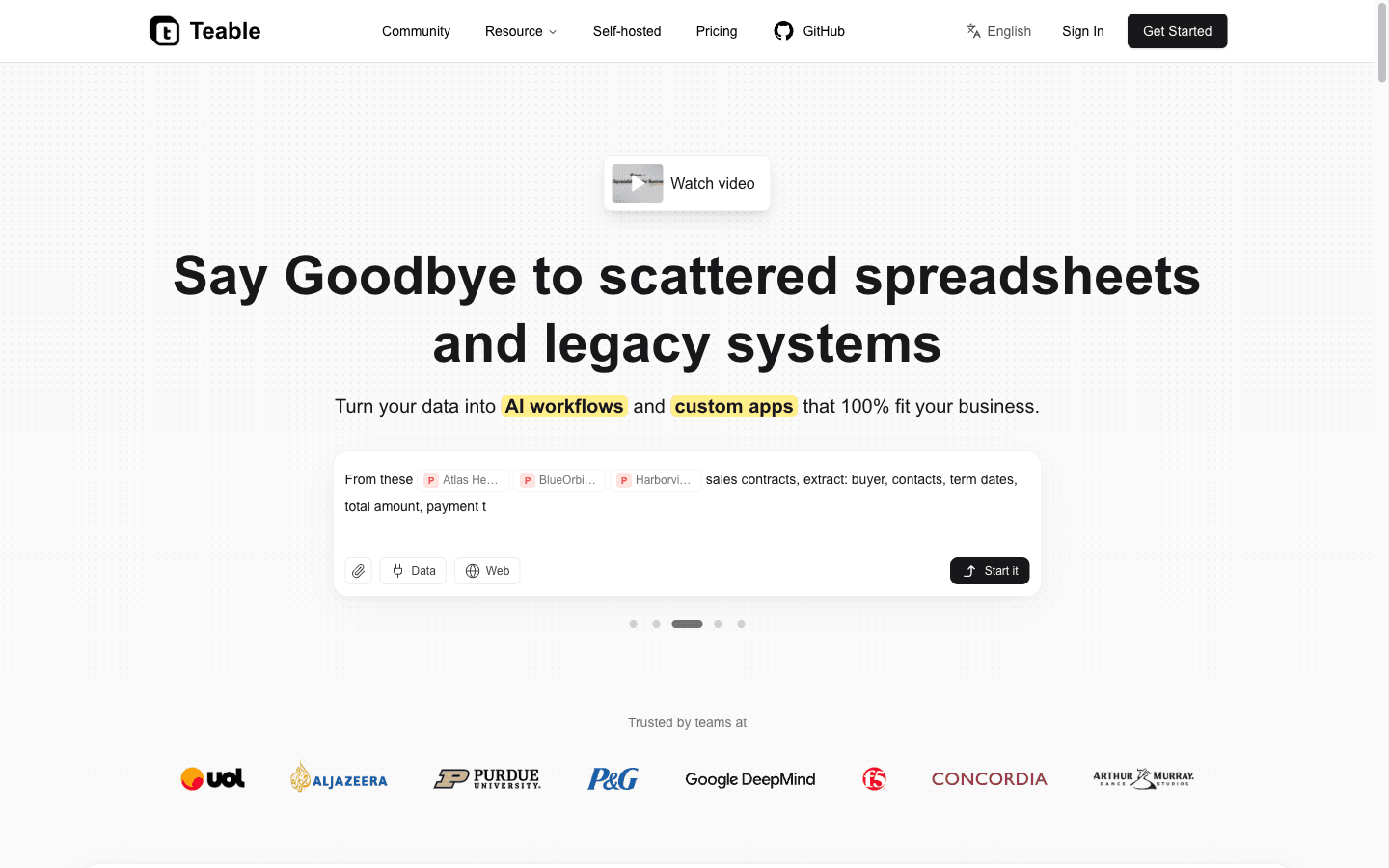
Apify stores your results; it doesn't give your team a good place to work with them. Teable is the database half of that workflow — an Airtable-class base with 250K-row capacity on Pro, automation runs, AI fields and chat included even on the free plan, and a self-hosted option the nav advertises for teams that want the data in their own infrastructure.
The catch: the AI credit model is opaque — Pro includes 2,000 credits per seat per month, but there's no public definition of what one credit costs, so AI-feature bills are hard to forecast. The independent review record is essentially one G2 review. And the self-hosted license has no public price — you'll be talking to sales.
Best for: teams that already have the data (from Apify or anywhere) and need a queryable, automatable home for it. Our Teable page covers the tiers.
4. Jet Admin — for dashboards and admin panels over your data
Free tier with limited AI credits. Pro: $16/mo billed yearly ($20 monthly) with unlimited apps and users. Business: $80/mo for SSO and audit logs.
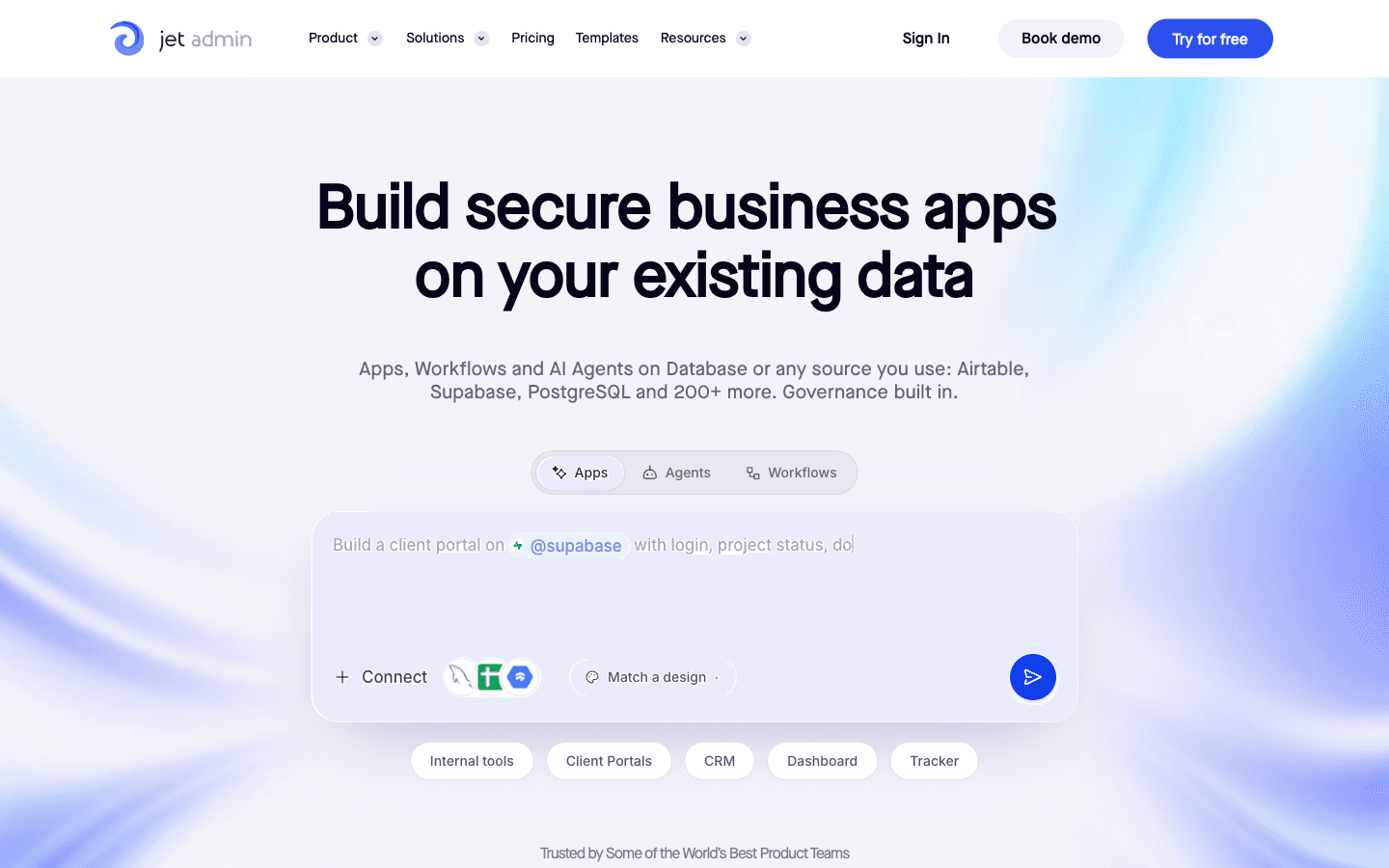
The other endpoint of the scraping workflow is an internal tool: a panel where your team reads and edits the collected data without SQL. Jet Admin connects to databases and APIs and builds admin panels, with unlimited apps, users, and workflows on every plan — the meter is AI credits for the build step, not seats. End users on your panels cost nothing per the FAQ.
The catch: the AI credit allowance per plan is not published anywhere, so you can't estimate build costs until you hit them. SSO and audit logs jump the price 5× to Business ($80/mo). The review base is small (G2 4.2 from 6 reviews, Trustpilot empty), and self-hosting exists only at the custom Enterprise tier.
Best for: ops teams that need a readable UI over collected data more than they need new collection. Details on our Jet Admin page.
5. The open-source route — Crawlee and your own scripts
$0 in platform fees. Your cost is developer time and wherever you run it.
Here's the honest option nobody's affiliate link promotes: Crawlee, the Node.js/Python scraping framework, is built and maintained by Apify itself — the company open-sourced its core engine. You get the HTTP/browser scraping primitives, queueing, and proxy rotation helpers for free, run them on a $5 VPS or a cron job, and own the whole pipeline. For a developer with a handful of sources, this beats every paid option on cost.
The catch is the reason Apify exists: you now maintain the scrapers. Sites change markup, anti-bot systems update, and your "free" pipeline costs engineering hours exactly when you can least spare them. Apify's own docs position Crawlee for developers and the Store for everyone else — that split is accurate. I haven't benchmarked Crawlee against paid Actors for this piece; treat this route as a staffing decision, not a pricing one.
The one-table decision
| If you are | Pick | Cost (verified Oct 2026) | Why |
|---|---|---|---|
| Need SERP data at volume | SearchApi | $40/mo, $4/1K searches | Pay-per-success, no proxy math |
| Gluing SaaS APIs into apps | NoCodeAPI | $12/mo for 50K calls | No OAuth management, cached calls |
| Team workspace over scraped data | Teable | $13/seat/mo annual | 250K rows + automations + AI fields |
| Internal dashboards/admin UIs | Jet Admin | $16/mo annual, unlimited users | Panel builder without per-seat fees |
| Have a developer, few sources | Crawlee (open source) | $0 + dev time | Own the pipeline; you maintain it |
| Marketplace breadth + no dev | Stay on Apify | $19/mo + usage | 99K actors, free $5 tier to start |
One line worth keeping: Apify's marketplace is the product and the meter is the price — the alternatives each unbundle one slice where a flat bill beats a marketplace.
Final verdict
If I were rebuilding a data operation today: SearchApi for anything search-shaped, Teable behind it as the data home, and no Apify subscription until a job appears that genuinely needs a marketplace Actor. If a client project demanded unusual sources — say, 40 different sites with anti-bot systems — I'd go back to Apify's free tier, price the specific Actors against the CU math, and only then subscribe.
What I'd avoid: staying on Starter ($19/mo + usage) out of inertia while burning $8/GB residential proxies for SERP data that SearchApi sells at a per-success rate. That specific mismatch is where most of the "Apify got expensive" stories start.
Last updated: October 27, 2026.
FAQ
What is the best Apify alternative?
There's no single one — Apify bundles marketplace, hosting, and proxies, and the alternatives each replace a slice: SearchApi ($40/mo) for SERP data, NoCodeAPI ($12/mo) for SaaS API connectors, Teable ($13/seat/mo) for the data layer, Jet Admin ($16/mo) for internal dashboards. Developers with few sources should also weigh Crawlee — Apify's own open-source framework — at $0 plus maintenance time.
Why does Apify get expensive at scale?
The plan fee is only one meter. Compute units ($0.2/GB-hour on Starter), third-party Actor fees, residential proxies ($8/GB), storage, transfer, and add-ons like concurrent runs all bill within one account, per the pricing page. G2's review aggregate lists "Pricing Issues" 88 times and "Expensive" 87 times — the complaint is forecastability, not opacity.
Is Apify's free tier actually usable?
Yes, unusually so: $5 of prepaid usage per month with no credit card, enough to run small Actors on real sources. It's the honest way to test whether a specific Actor covers your job before subscribing. The catch is that scaling past it introduces the layered billing above.
What do developers use instead of Apify?
Crawlee — Apify's own open-source Node.js/Python framework — plus a $5 VPS and cron is the standard DIY stack, and Scrapy serves the Python-first crowd. The trade is maintenance: you own every scraper when a site changes. Teams without a developer should stay on managed platforms.
How much does Apify cost per month?
Free ($0, $5 usage included), Starter $19/mo plus pay-as-you-go, Scale $199/mo, Business $999/mo, Enterprise custom — verified on apify.com/pricing on 2026-10-26, with annual billing 10% off. Compute-unit rates drop from $0.2 (Free/Starter) to $0.13 (Business), while proxies, storage, and Actor fees meter separately on every tier.
Disclosure: This page contains affiliate links for several tools reviewed. SearchApi, NoCodeAPI, Teable, Jet Admin, and Apify have active affiliate programs; commissions don't change the prices you pay or the verdicts above. Crawlee is open-source software with no affiliate program — it's listed because it's the genuinely cheapest route for developers. Pricing was verified from vendor pages on 2026-10-26 and can change.