5 GPTZero Alternatives That Actually Fit Different Jobs (2026)
Last updated: October 27, 2026 | Pricing verified 2026-10-26/27 from each vendor's own pricing pages. Research-only: I have accounts-planned around these tools but haven't run a paid scan battery yet — every accuracy claim below is labeled with where it comes from.
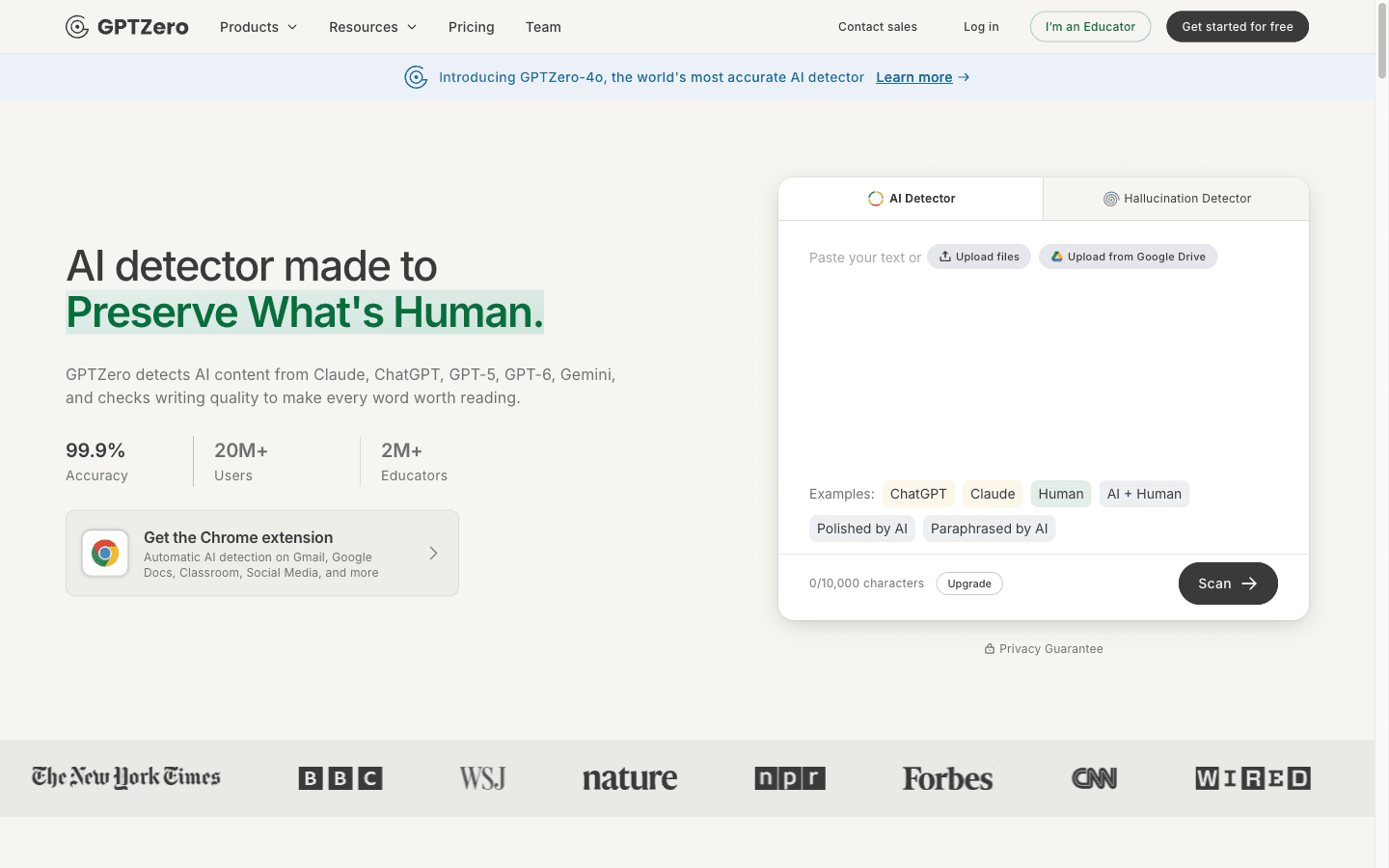
GPTZero is the most famous AI detector and, on the evidence we pulled, the one I'd be most careful about paying. Its Trustpilot sits at 2.1/5 across 43 reviews in the last 12 months, and the complaints cluster on two things: billing (one reviewer reports a €101.54 annual charge on day one of a free trial) and false positives on human writing — ESL academic essays and even pre-AI-era books flagged as fully AI-generated. The detection explainability is genuinely good. The commercial behavior around it is the reason people search for alternatives.
Quick verdict, by persona: teachers on a budget get more from Winston AI at $5/mo. Publishers and content teams need Originality.AI's plagiarism pairing at $12.95/mo. If your problem is a flagged draft rather than scanner choice, you don't want another detector at all — you want the humanizer route, and that's a different decision with its own catch.
Why people leave GPTZero
the top three reasons in documented reviews are billing complaints, false positives on non-native English writing, and price opacity — region-dependent geo-rendered pricing that hides USD list prices, annual plans billed upfront.
None of these are about detection quality. GPTZero's sentence-level highlighting is the best explanation layer in the category, and Writing Replay — a video record of how a document was actually drafted, including pastes — is evidence no other detector here offers. It's also the detector with institutional gravity: SOC 2 Type II, FERPA/GDPR/CCPA compliance, an American Federation of Teachers partnership claim. If your school district already standardized on it, switching costs more than it returns.
But if you're choosing fresh, the pattern in the reviews matters. A detector you can't cancel cleanly is a liability, and a detector that flags honest ESL students creates work you then have to undo with the evidence layer. Both complaints repeat enough in the last twelve months to treat as structural, not anecdotal.
The alternatives, by job
there is no single "best GPTZero alternative" — the right pick depends on whether you're checking volume, checking for plagiarism too, or trying to fix a document that already got flagged.
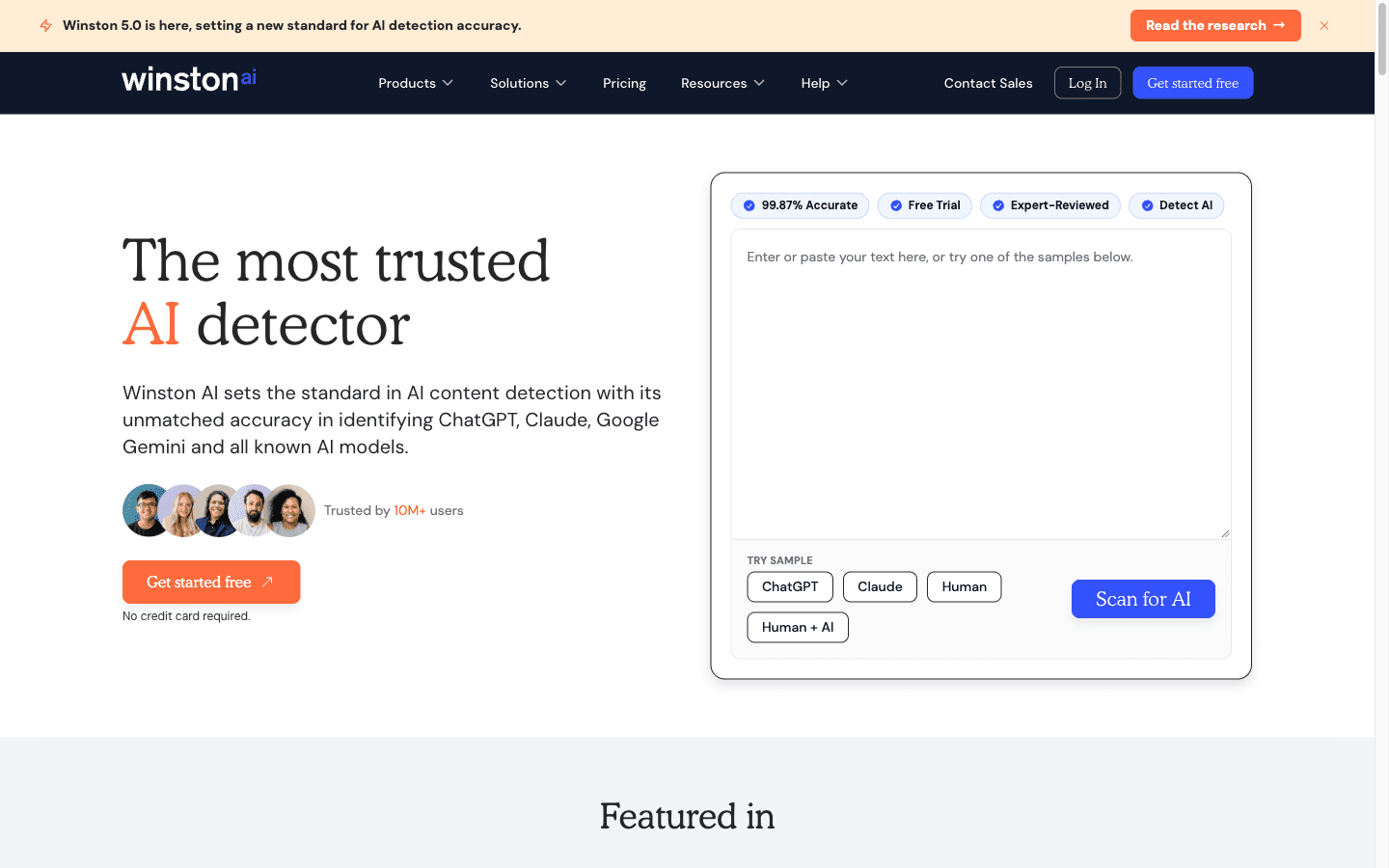
1. Winston AI — for teachers and anyone watching budget
$5/mo billed annually ($60/year) for 100,000 credits. Monthly billing: $10/mo.
Winston is the price disruptor of the category. Twenty times GPTZero's free-tier allowance at a fifth of the list price, with OCR that reads scanned documents and handwriting, plus AI image detection covering Midjourney and DALL-E output in the same subscription. Its accuracy page claims #1 on the RAID benchmark — 99.89% of AI text caught at a 1% false-positive rate — and zero false positives across 25,996 student essays. That's vendor-run benchmarking, not independent verification, but it's more methodology than most competitors publish.
The catch, and it's a real one: their own pricing FAQ states annual plans cannot be cancelled during the term. Monthly cancellations only take effect at term end. Combine that with the 50%-off coupon (BTS50) displayed on every tier and you get a vendor that treats list price as an opening bid and annual commitment as the actual product. Go monthly ($10/mo) until you trust it.
Best for: educators, tutors, admissions reviewers — anyone whose need is periodic, high-volume text checks on a small budget. Full breakdown on our Winston AI page.
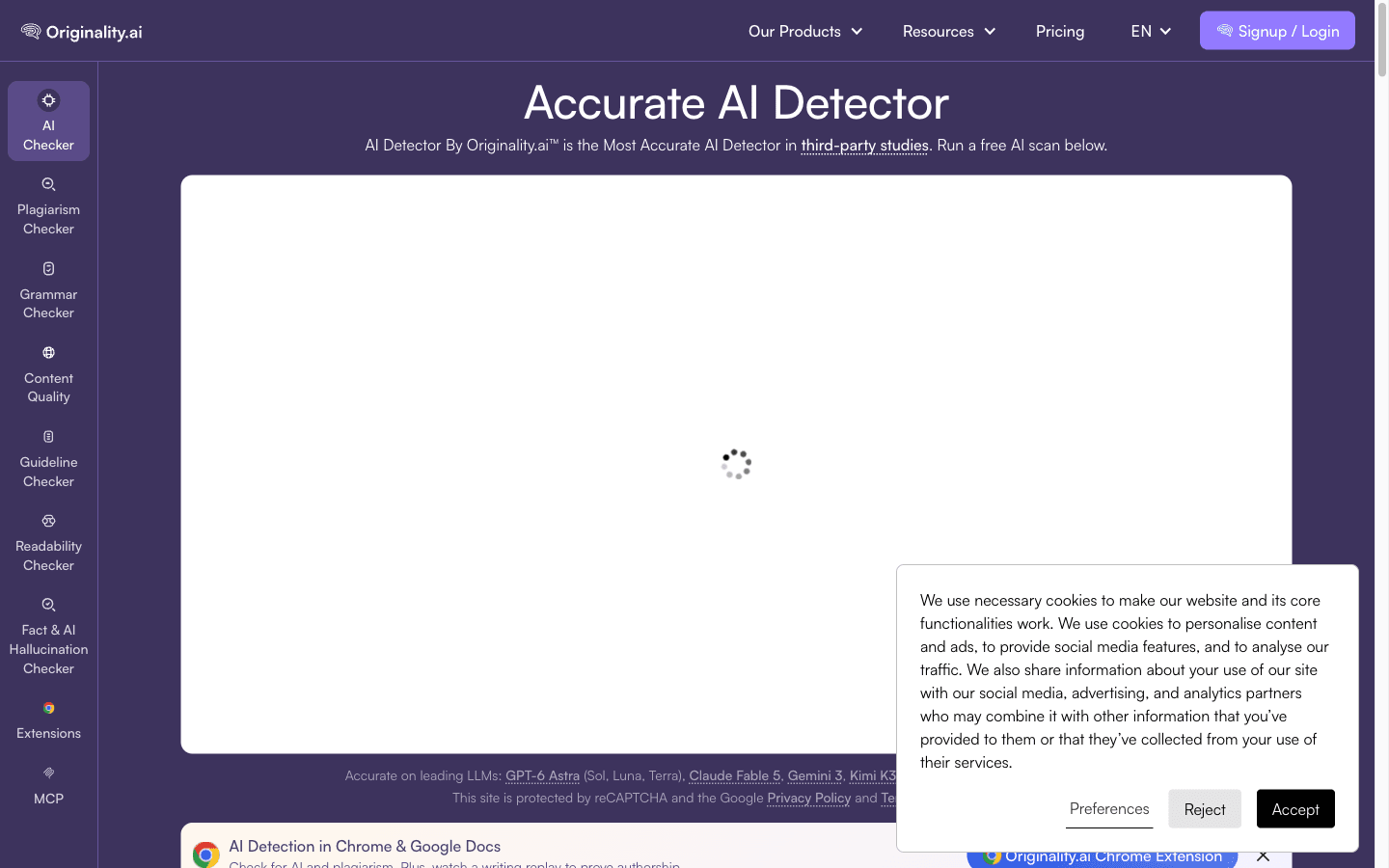
2. Originality.AI — for publishers and content teams
$12.95/mo annual for 2,000 credits (200,000 words). Free tier: 100 one-time credits.
Originality is the only detector in this set built for people who publish content rather than grade it. Detection, plagiarism, readability, and fact-checking all draw down one credit balance — a combined AI-plus-plagiarism scan of 100 words costs 2 credits. Deep Scan explains which specific sentences read as AI and suggests ethical edits, which is the feature that matters when an editor has to fix a freelancer's submission rather than just reject it.
Operationally it's the most credible of the three: they reply to 100% of negative Trustpilot reviews, typically within 24 hours. That doesn't make the product flawless — the October 2026 5.0 model update drew accuracy complaints and removed legacy models without refunds, and subscription credits expire monthly whether you use them or not. But a vendor that answers its critics in public is a different risk profile from one that doesn't answer at all.
Best for: content teams, agencies, affiliate publishers — anywhere plagiarism checking belongs next to detection. We compared the two head-to-head in GPTZero vs Originality.AI.
3. EssayDone AI — for students, with a warning we mean
$15/mo for 20,000 humanizer words, bundled with a three-detector check and academic search.
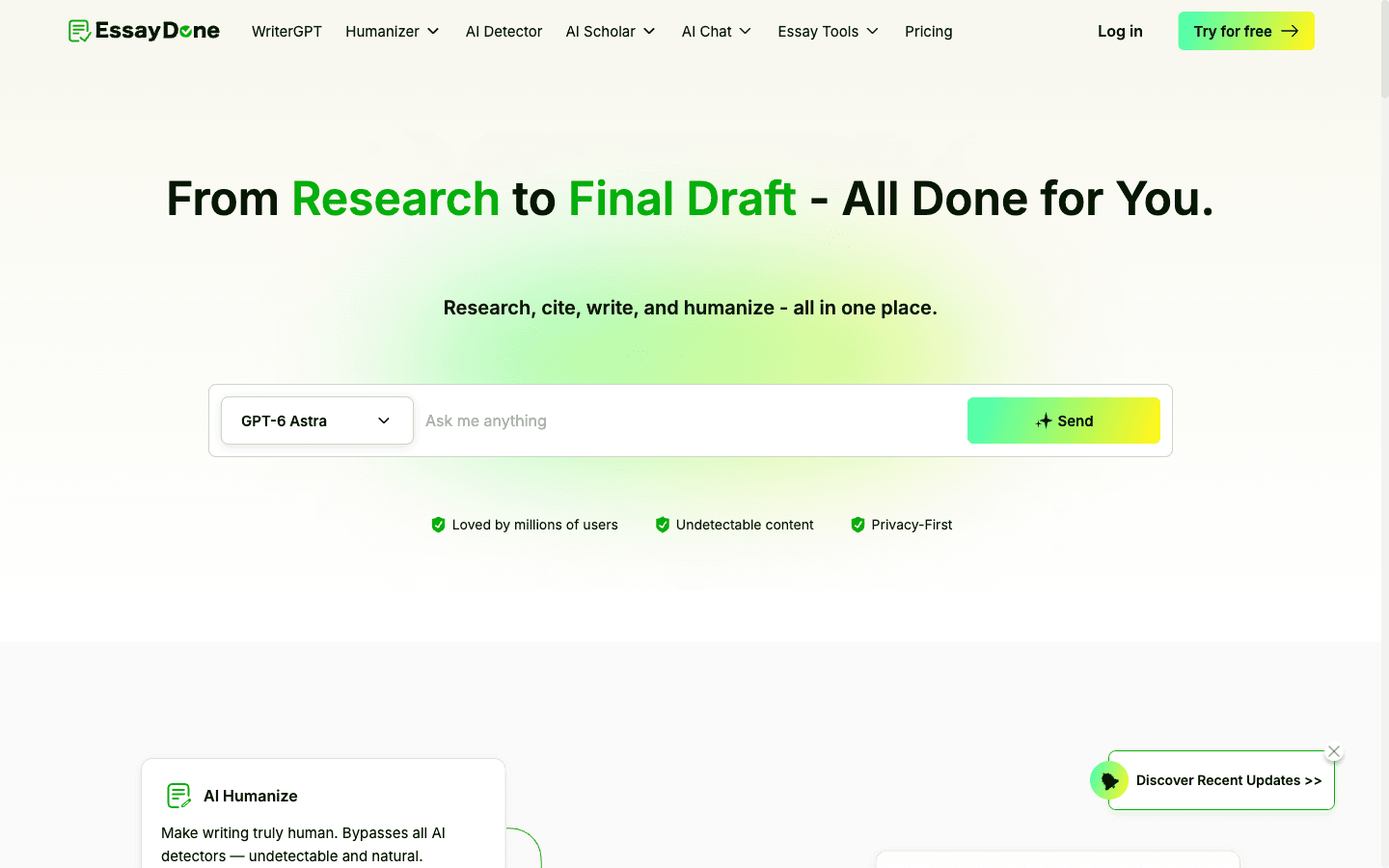
EssayDone isn't a pure detector — it's a student-facing suite where the detector check exists to verify the humanizer's output. The pricing is honest about quotas in a way most competitors aren't: humanizer words, detector words, and chat credits are all published per tier before checkout, and the Basic model is unlimited on every plan.
Here's the warning: the vendor claims "around a 90% chance of passing Turnitin/GPTZero/Originality after one rewrite, up to 99% with 1-2 more runs" — with no independent verification anywhere. Trustpilot sits at 2.9/5 from two reviews, both one-star, including one reporting rewrites that changed the meaning of the text. And the deeper issue isn't the tool at all: submitting humanized AI text as your own work is an academic-integrity violation regardless of what any detector says. We list it because students ask; we wouldn't build a workflow on it.
4. The humanizer route — when the problem is a flagged draft
if your text already got flagged and it's your own content, the alternative to a better detector is a humanizer with a built-in detector loop — WriteHuman, GPTHuman, or Humanize AI.
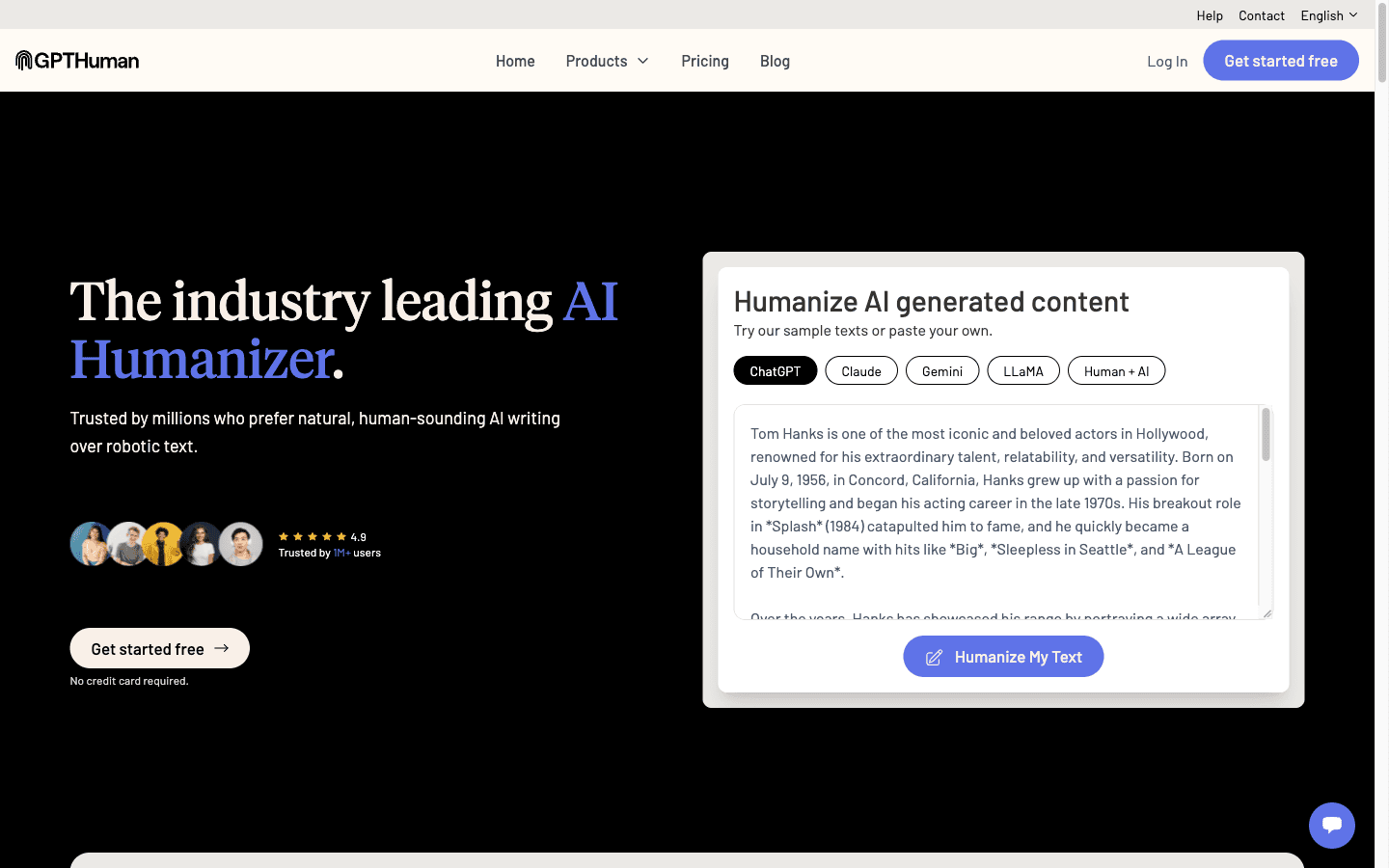
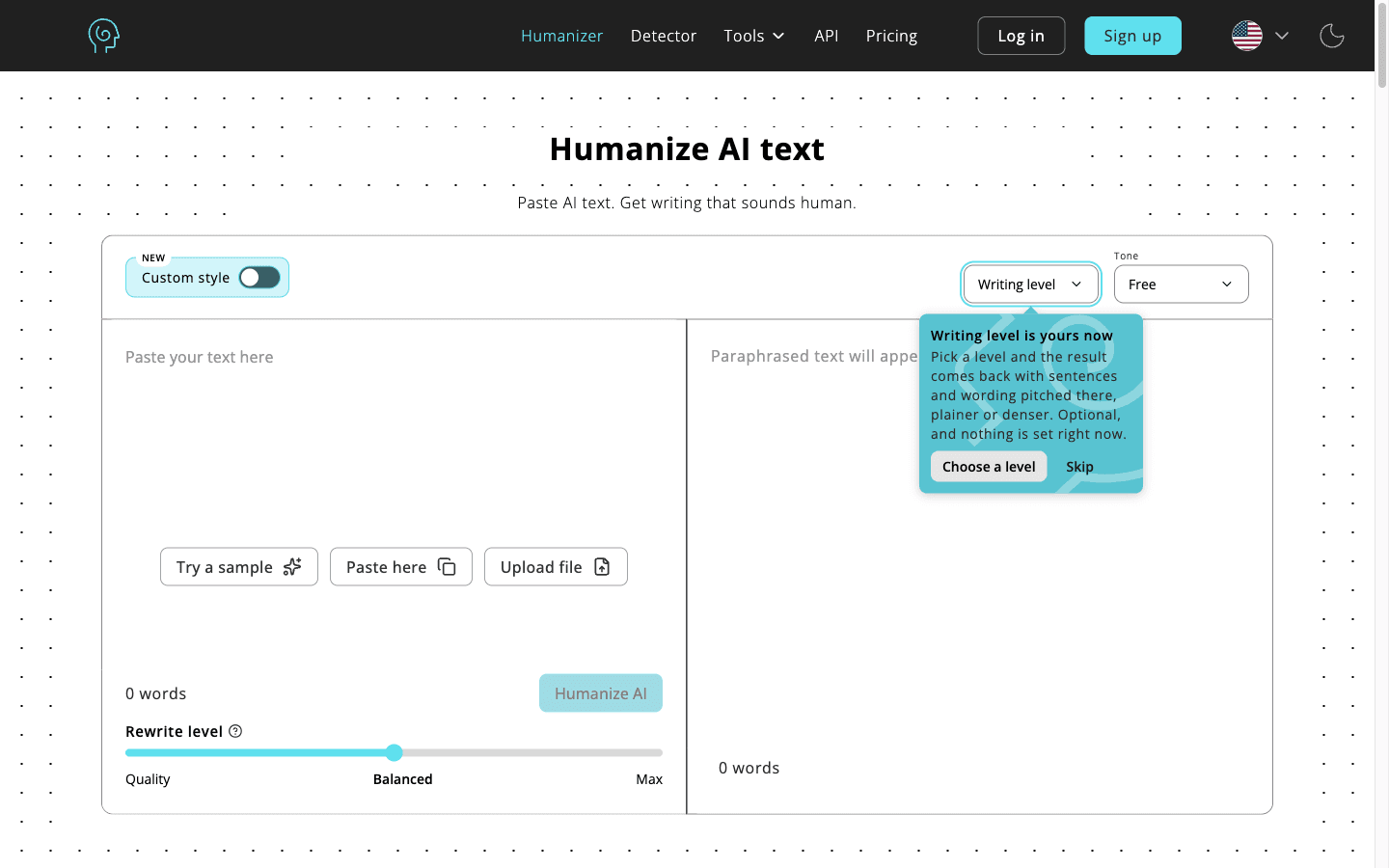
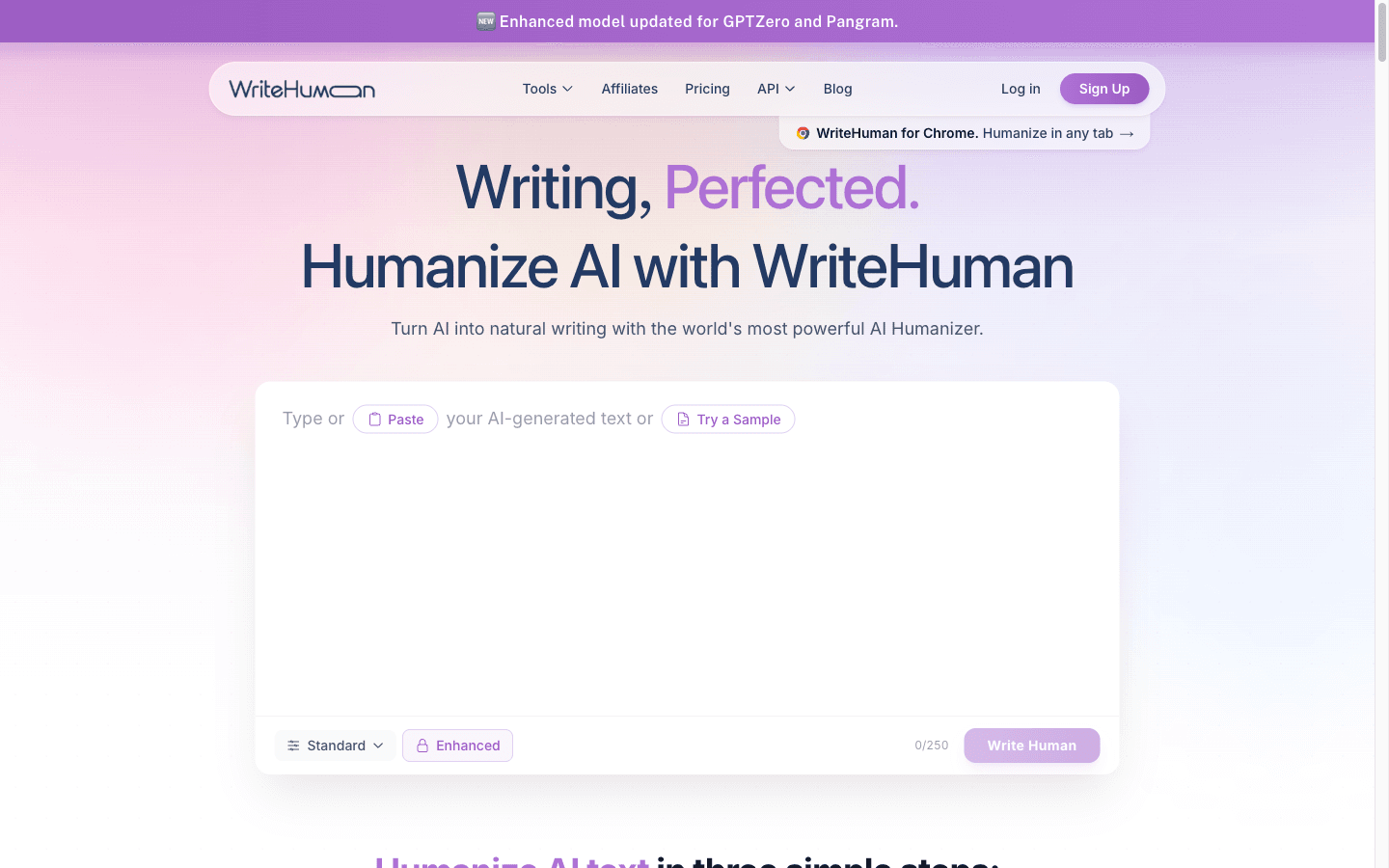
Three things separate these from the detectors above. WriteHuman ($12/mo annual) scores every sentence and returns 2–5 output variations, so you fix the flagged lines instead of re-rolling the document. GPTHuman ($8.25/mo annual) runs detector and rewriter in one loop until the text reads human. Humanize AI ($4.99/mo annual) is the cheapest entry but can't re-humanize its own output on the Lite tier.
The catch that applies to all three, and it's structural: detector evasion decays. These tools tune against specific detector models, and the detectors update. WriteHuman's own site advertises a model "updated for GPTZero and Pangram" — which is the business model saying the quiet part out loud. Whether that loop actually holds in practice is exactly what we examined in humanizer vs detector test evidence. Short version: treat every pass as temporary and re-check before anything ships.
5. Google's synth ID detectors and the free floor
if your volume is low, the true alternative to paying is GPTZero's own free tier — 10,000 words/month with Basic Scan — plus the free detectors inside Originality.AI (daily-renewing free credits) and Winston's 2,000-credit/14-day trial.
For most solo bloggers checking one or two drafts a week, the free tiers cover it. The paid decision only arrives with volume: a teacher grading 90 essays, an agency screening freelancers, a publisher running every post through combined detection-plus-plagiarism. Don't pay for detection before you've measured your actual monthly word count — it's the easiest subscription in this niche to overbuy.
The one-table decision
| If you are | Pick | Cost (verified Oct 2026) | Why |
|---|---|---|---|
| Teacher, high volume, low budget | Winston AI | $5/mo annual ($10 monthly) | 100K credits, OCR, image detection |
| Publisher needing plagiarism too | Originality.AI | $12.95/mo annual | One credit balance, Deep Scan explanations |
| Institutional, already standardized | Stay on GPTZero | Free tier; Premium ~$24/mo annual equiv. | Switching costs exceed the billing friction |
| Your own draft got flagged | WriteHuman or GPTHuman | $12 / $8.25 annual | Fix-the-lines loops; evasion decays |
| Student under deadline | Don't build a workflow on this | — | Integrity risk regardless of detector output |
One line worth keeping: GPTZero is explainability-first, Winston is price-first, Originality is publisher-first — and the billing pages tell you more about each vendor than the accuracy pages do.
Final verdict
If I were setting up detection for a content operation today: Originality.AI paid, GPTZero free tier kept alongside for the explainability layer, Winston as the budget fallback if credits run hot. What I'd avoid is annual-billing any of them in month one — every vendor in this category has a pricing footnote worth reading first, and two of the three won't let you out of it.
Last updated: October 27, 2026.
FAQ
What is the best free alternative to GPTZero?
GPTZero's own free tier (10,000 words/month) is actually the strongest free option — the alternatives' free tiers are thinner: Originality.AI gives 100 one-time credits, Winston AI gives 2,000 credits for 14 days. If you're avoiding GPTZero specifically because of its billing reputation, the free tier doesn't expose you to it; there's no card required for the word allowance.
Is Winston AI as accurate as GPTZero?
Winston's vendor-run results (99.89% detection at 1% false-positive rate on the RAID benchmark) are impressive but self-reported. GPTZero doesn't publish equivalent third-party verification either. Independent complaint patterns differ: GPTZero's reviews center false positives on ESL writing; Winston's smaller review base includes short-paragraph false-flag reports. Neither claim set is independently verified — test both on your own text before committing.
Why is GPTZero controversial?
Two documented patterns: Trustpilot reviews (2.1/5, 43 in the last year) describe billing problems including charges during free trials and multi-screen cancellation flows, and detection reviews describe human writing — especially ESL academic text — flagged as AI. The explainability features are genuinely strong, which makes the operational complaints more frustrating rather than less.
Do AI humanizers actually beat GPTZero?
Sometimes, temporarily. The documented record shows humanizer output passing on the day it's processed and failing after detector model updates — WriteHuman's own marketing advertises a model "updated for GPTZero and Pangram." We reviewed the documented evidence in humanizer vs detector test results. Never rely on a pass for anything with a deadline, and never submit humanized text where AI use isn't permitted.
What's the cheapest paid AI detector?
Winston AI at $5/mo billed annually — 100,000 credits/month with OCR and AI image detection included. The comparable price points: Humanize AI is cheaper ($4.99/mo) but it's a humanizer with a check, not a dedicated detector; Originality.AI runs $12.95/mo; GPTZero's paid tier works out around $24/mo annual equivalent per their own educator page.
Disclosure: This page contains affiliate links for several tools reviewed. Originality.AI, Winston AI, WriteHuman, GPTHuman, Humanize AI, and EssayDone AI have active affiliate programs; GPTZero's listing is based on its category position, not an affiliate relationship. We also recommend tools with no affiliate program when they're the best fit. Pricing was verified from vendor pages on 2026-10-26/27 and can change.