Best AI Tools for Ecommerce 2026: Product Photos, Video Ads, and the Ops Layer
Last Updated: October 27, 2026 Method: Research-only. Every price below was verified against vendor pricing pages on October 26–27, 2026. Scope note, stated up front: ecommerce AI in our directory lives across several categories — photography, video, automation — so this roundup pulls the six published tools that genuinely carry ecommerce workloads into one job-sorted view. Small but focused, on the record. Judgments come from the documented record, not from our own store launches.
Ecommerce is where the AI keyword data is friendliest to smaller stores: "ai tools for ecommerce" runs 590 US searches a month at a very winnable KD 31, and the intents fracture into exactly the jobs you'd guess — "best ai tools for ecommerce product photography mockups" (110/mo, KD 12) and "best ai ecommerce automation tools for shopify 2026" (110/mo, KD 27). Both get their own sections below. The pattern across every verified tool: the sticker is cheap, the meter (photos, coins, minutes, credits) is the real price, and one license clause can disqualify a tool for ad use entirely.
Quick answer: for product photography, Photo AI Studio ($19/mo, roughly 50 renders from one trained product/face model) is the price floor — budget $1–2 per keeper. For product video ads, KreadoAI ($19/mo) does URL-to-video at batch volume and Zebracat ($23/mo yearly) turns text and links into scheduled social video. For localization at scale, Akool ($12/seat/mo) — with the commercial-license trap that starts at $174.30/mo for paid campaigns. For the social ops layer, Ocoya ($29/mo) writes, designs, and schedules — with a billing record you should read. For training seasonal staff on SOPs, Glitter AI ($249/mo) turns a screen recording into a guide in 99 languages.
One line worth keeping: ecommerce AI doesn't replace the studio, the agency, or the manager — it replaces the 40% of their output that was never worth what you paid for it: the hundredth product angle, the fifteenth ad variant, the onboarding doc nobody updated.
Product photography: the KD 12 niche with real economics
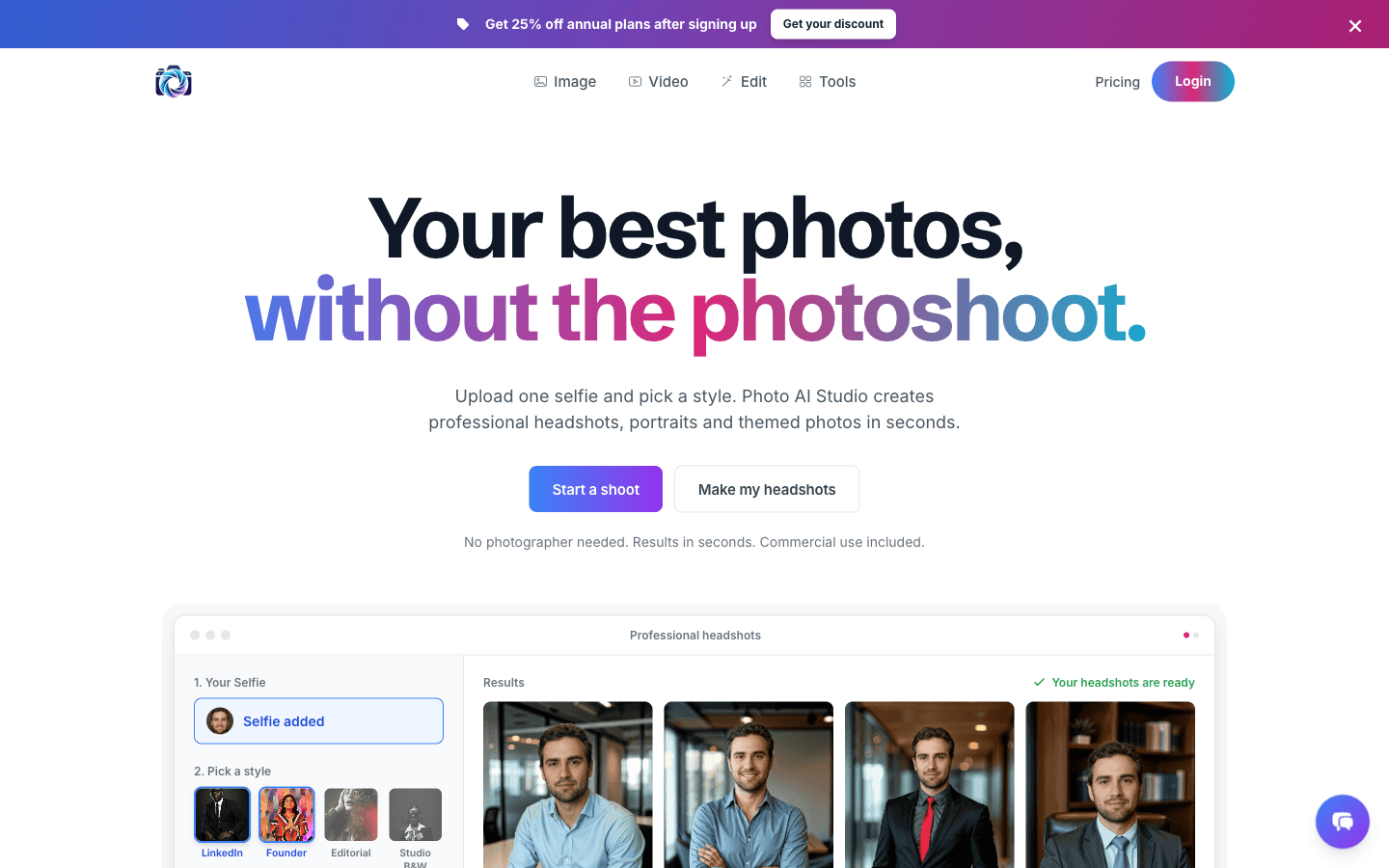
Photo AI Studio at $19/mo generates photoshoot-quality product and model images from a selfie-trained model — roughly 50 renders on the Basic tier, with a commercial license included. The catch is the keeper math and a refund policy that contradicts its own badge.
Photo AI Studio (home category: AI design) trains on your inputs and renders shoot-style images: Basic is $19/monthly for 3,000 credits (about 50 images) with HD output and a commercial license; Pro is $39/monthly for about 125 images at 2K plus 30-second AI video; Premium is $79/monthly for about 333 images at 4K plus RAW and 2-minute video. Against a $35–75-per-image studio rate, even at $1–2 per keeper render the math wins — but the keeper rate is the whole game: expect 3–5 renders per usable image and budget accordingly. The trust layer needs the same paragraph it got in our design roundup, because it matters more when your product imagery ships to customers: the site badge says "14-day refund guarantee," the policy page says refunds only under four conditions that contradict it, a reviewer documents a trial that charged with zero credits, and the on-site "4.9 · Trustpilot" widget reads 3.9 live (127 reviews, 23% one-star). Test on your cheapest product, keep the refund window's terms in writing, and the economics still work.
Product video ads: URL to ad creative at batch volume
KreadoAI ($19/mo) is the batch machine — paste a product URL, get publish-ready video, with unlimited TikTok-style product video on Pro — and Zebracat ($23/mo yearly) is the social-video turner for text, scripts, and links. Both meter in their own coins, and both catches are meter catches.
KreadoAI (home category: AI video) is purpose-built for ecommerce creative: product URL in, ad video out, 700+ avatars and 40,000+ voices in 140 languages, and — on Pro — unlimited TikTok-style product video and unlimited translation. Free gives 180 K-Coins once (about 3 minutes of video, ever — the honest trial bench); Premium is $19/mo (against a struck-through $24) for about 30 minutes of finished video; Pro is $40/mo for about 50 minutes. We ran the head-to-head: Akool vs KreadoAI. The catch is the coin math at media-buying cadence: 30–50 minutes a month is small once you're testing dozens of creative variants weekly, and do-overs burn the same coins as keepers. Social proof is also thin (a 4.7 on G2 from five reviews). Buy it for the URL-to-video workflow; price it per finished minute against your actual ad volume.
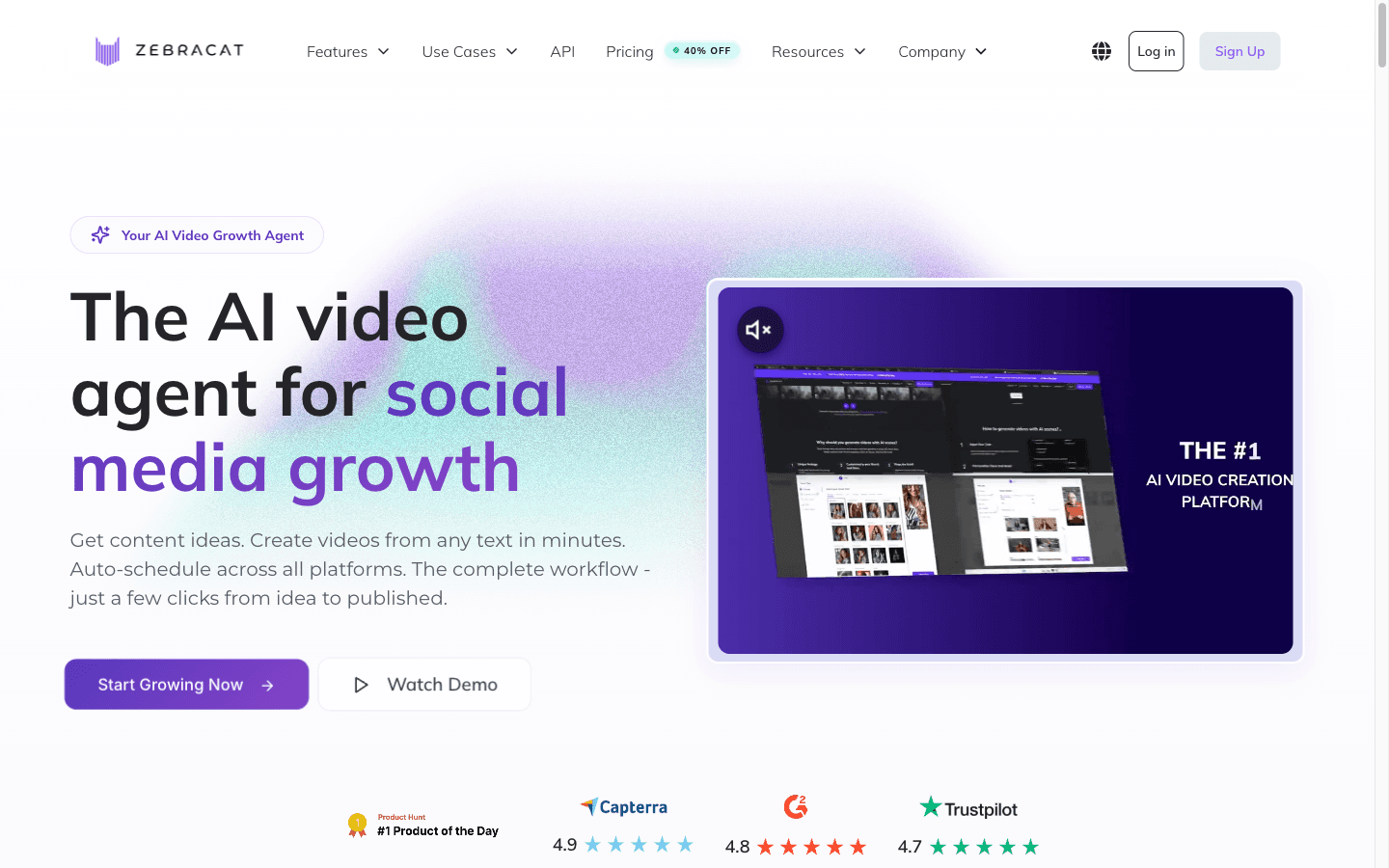
Zebracat (home category: AI video) turns text, scripts, and blog URLs into scheduled social video — the closest thing here to a hands-off content intern for a store's social channels. Cat Mode is $39/mo monthly or $23/mo yearly (against the $39 list) for 15 videos and 350 generative credits; Super Cat is $99/$59 for 40 videos; Unlimited Cat is $199/$119 with a 3,600-credit ceiling — "Unlimited" is a credits ceiling wearing a crown, per our video roundup. On yearly billing a video costs about $1.50, genuinely good for faceless social content. The catches: heavy AI-scene use hits the credit wall before the video count does, and the refund policy is restrictive enough to read before an annual swipe.
Localization: the multiplier for cross-border stores
Akool ($12/seat/mo) is the localization engine — face swap and translated avatar video that make one ad feel native in ten markets. The catch is the starkest in this roundup: every plan through Pro Max ships a personal license, so the $12–41 seats legally cover drafts; paid campaigns need Business from $174.30/mo.
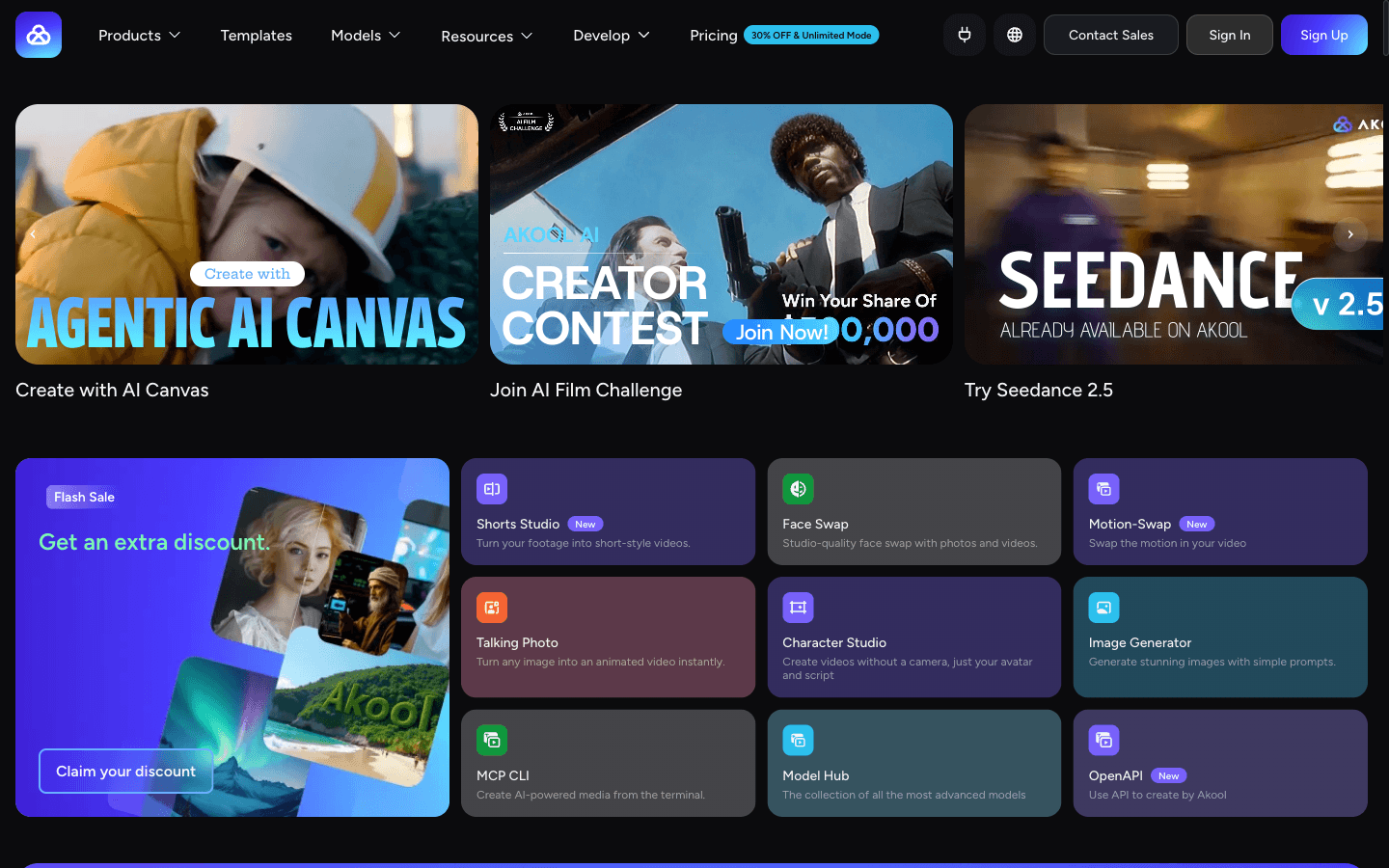
Akool (home category: AI video) earns its ecommerce place on the localization job: swap faces and voices so one creative works per market, translate with proofreading on Pro tiers, and generate product placements from stills. Starter is $12/seat/mo billed yearly for 200 credits; Pro is $21/seat/mo (30% off the $30 list at verification) for 600–2,400 credits at 4K; Pro Max is $41.30/seat/mo for 8K and API access. Free gives 720P watermarked drafts with no license. We compared the two localization-capable tools head-to-head: Akool vs KreadoAI — Akool wins the face-and-voice localization job; KreadoAI wins the URL-to-video volume job. The license line is the decision line: a store testing localized creative drafts can run the $12 seat; a store running those creatives as ads is on Business pricing, and the per-market ROI math should include that floor from day one.
The ops layer: social scheduling and team training
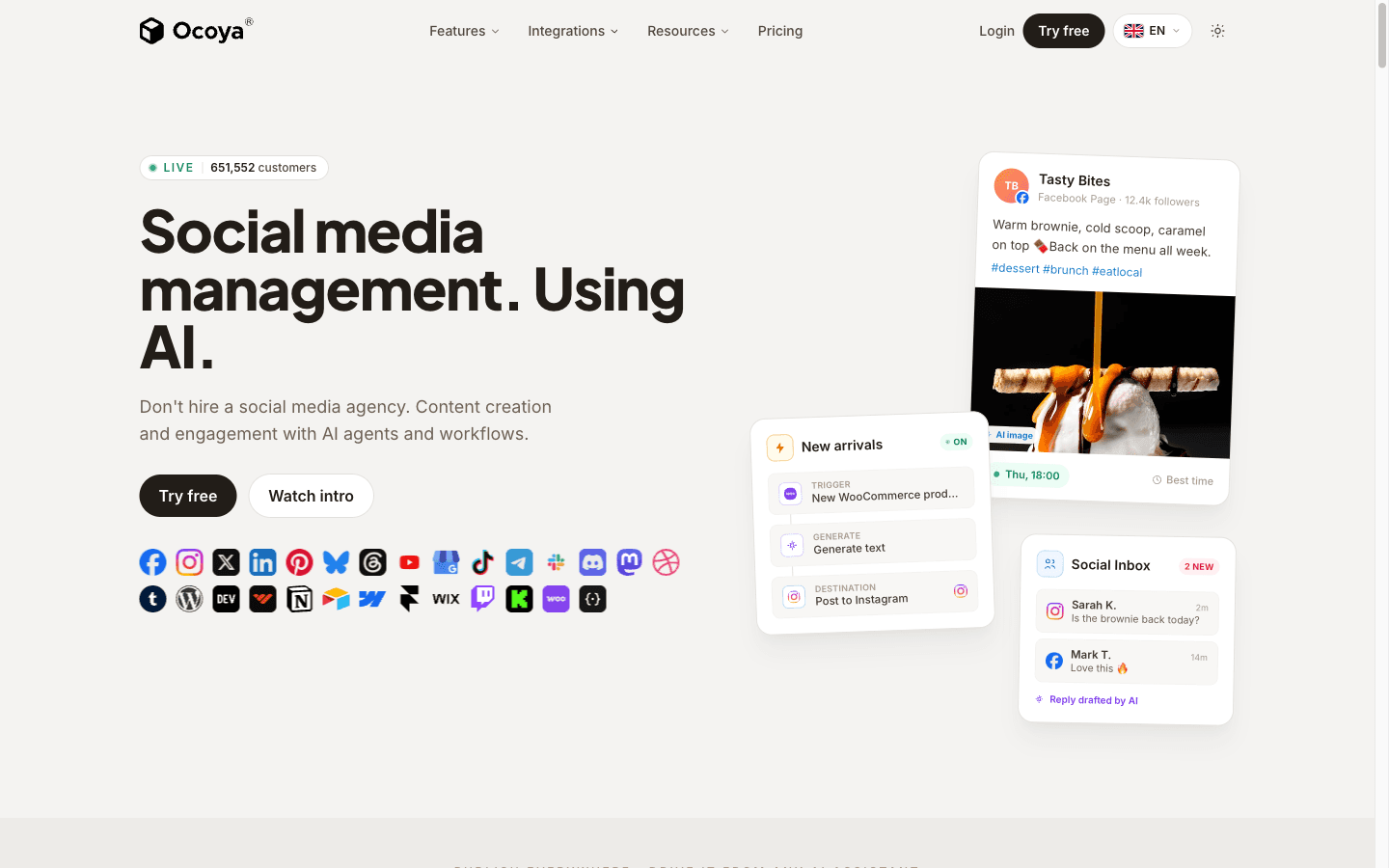
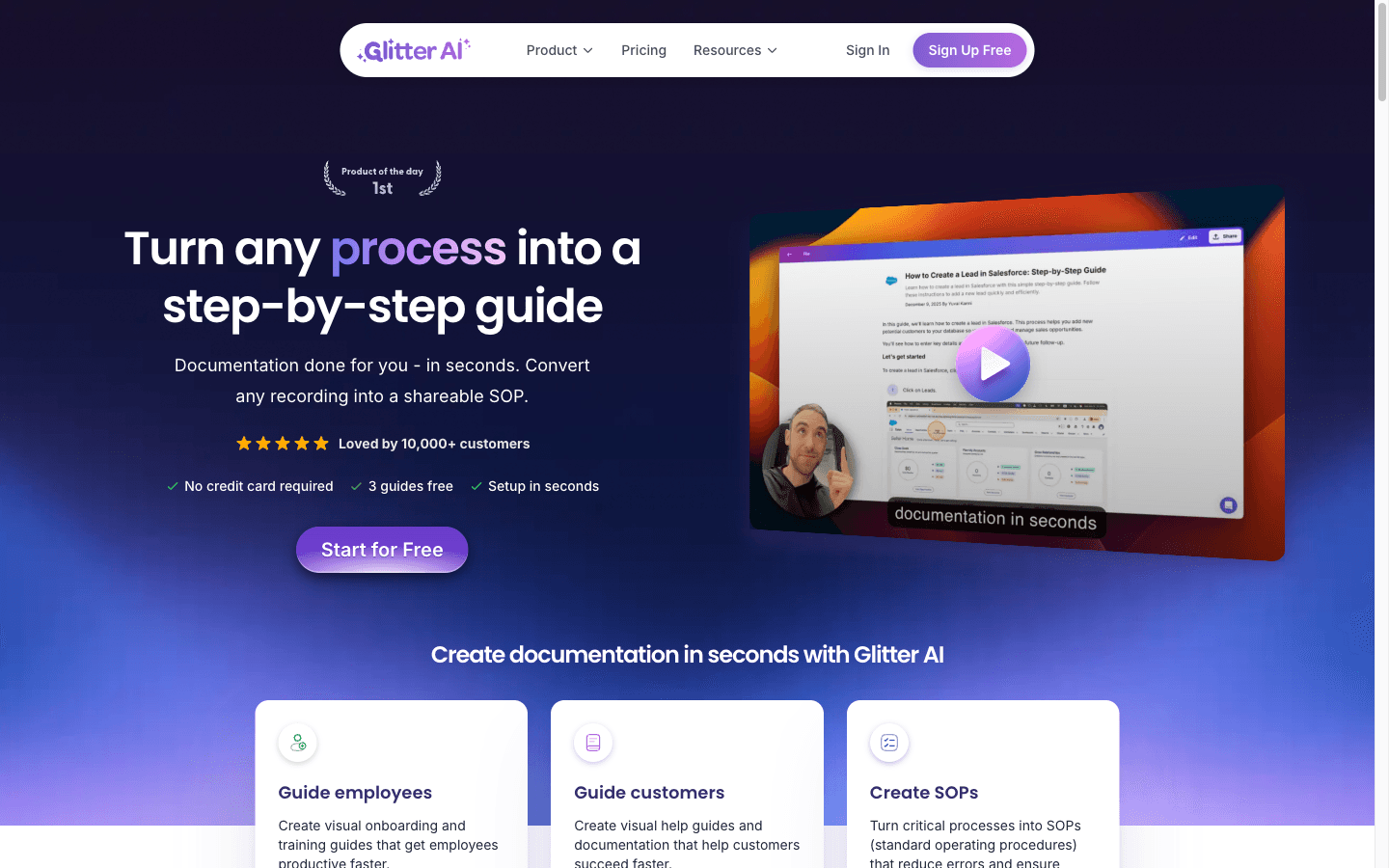
Ocoya ($29/mo) is the AI social manager that writes, designs, and schedules a store's content — with a Trustpilot record (1.3/227) that we weigh heavily and disclose in full. Glitter AI ($249/mo) solves the least glamorous ecommerce problem: training and re-training warehouse, support, and VA teams with SOPs that stay current.
Ocoya (home category: AI automation) generates posts and visuals, schedules across networks, and connects to Shopify — the write-design-schedule loop for a store's social presence. Starter is $29/mo ($290/yr) for 5 scheduled posts per profile; Team is $79/mo ($790/yr) for 20; Agency is $199/mo ($1,990/yr) for 100. Here's the part most ecommerce listicles skip: Trustpilot sits at 1.3 from 227 reviews, with recent reviews dominated by billing complaints and a G2 review describing a "broken cancellation system" (reported onward to Action Fraud UK); the 4.6 on G2 is real but 2022-era. Our position, stated in our automation roundup and repeated here: the product story is real, the billing record disqualifies it from our recommendation until it changes — trial only, virtual card, calendar the cancellation. Ecommerce social scheduling at this price exists elsewhere (Nuelink at $16/mo, OneUp at $25/mo — see Best AI Social Media Tools).
Glitter AI (home category: AI automation) records a process once and writes the SOP — numbered steps, screenshots, 99 languages, readers free — which is exactly the job of onboarding seasonal warehouse staff, support VAs, and agency contractors without repeating yourself. Free gives 3 watermarked guides; Growth is $249/mo for 3 creator seats with unlimited guides; Scale is $499/mo adding AI voiceover, avatars, version control, and SCORM export for LMS import. The catch is the same hire-vs-tool math from our automation roundup: $249/month only pays for itself at real training volume — a store churning seasonal staff every quarter, or an SOP library in five languages. Below that, the free 3 guides cover the annual essentials.
What an ecommerce AI stack actually costs
a solo store's creative stack runs $42–110/month; scaling to batch ad testing and localization crosses $200 — the meters, not the stickers, make the difference. Verified October 2026:
| Ecommerce job | Stack | Steady state |
|---|---|---|
| Product photos, solo store | Photo AI Studio Basic | $19/mo (~50 renders) |
| Social content engine | Ocoya Starter (billing-record caveats) or Nuelink Standard | $16–29/mo |
| Product video ads, testing | KreadoAI Premium + Zeemo Pro | $27/mo |
| Video + social on autopilot | Zebracat Cat Mode + Zeemo Pro | $31/mo |
| Cross-border, localized ads | Akool Business (license floor) + Photo AI Studio | $193/mo |
| Seasonal-staff training | Glitter AI Growth | $249/mo |
Read the localization row twice: the $174.30 Akool Business floor is not an upsell artifact — it's the legal price of running AI creative in paid campaigns, and it changes which tool wins the job at real ad budgets. Read the Ocoya row the same way: the cheapest sticker in the table carries the most expensive trust problem.
Where ecommerce AI still breaks in 2026
the failure modes are keeper math, license traps, and billing hygiene — not generation quality. Three checks before any card leaves your wallet.
- Price the keeper, not the render. Photo AI Studio's ~50 images cost $0.38 each; usable images cost $1–2. KreadoAI's coins buy minutes that include do-overs. Every creative meter in this roundup charges for attempts, not outcomes — model your keeper rate honestly and the tool decision often reverses.
- License tiers are where ad money leaks. Akool's personal license covers everything through 8K Pro Max and none of your actual paid campaigns. If the output ships in ads, the Business tier is the price of admission — budget it before comparing tools, and check every vendor's terms, because this pattern is spreading across AI video.
- Billing records predict your renewal experience. Ocoya's 1.3 Trustpilot is the loudest signal in our directory, but the quieter lesson generalizes: read the last 12 months of reviews for any subscription touching your store — legacy 2022 scores describe different companies, and a cancellation that doesn't take is worse than a tool that doesn't work.
Decision framework
| Your ecommerce job | Pick | Verified entry price | The catch that decides |
|---|---|---|---|
| Product photos at volume | Photo AI Studio | $19/mo (~50 renders) | Keeper math 3–5×; refund badge ≠ policy |
| URL-to-video ad creative | KreadoAI | $19/mo (Premium) | Coin math at testing cadence; thin reviews |
| Social video from text/links | Zebracat | $23/mo yearly (Cat Mode) | "Unlimited" caps AI credits; refund policy |
| Localization for paid ads | Akool | $12/seat (drafts) → $174.30/mo (ads) | License floor; commission-rich ecosystem |
| Social ops + Shopify | Ocoya | $29/mo (Starter) | Trustpilot 1.3 — trial with virtual card only |
| Team training SOPs | Glitter AI | $249/mo (Growth) | Hire-vs-tool math at low training volume |
FAQ
What are the best AI tools for ecommerce in 2026?
Sorted by job: Photo AI Studio ($19/mo) for AI product photography, KreadoAI ($19/mo) and Zebracat ($23/mo yearly) for product video ads, Akool ($12/seat/mo, with a commercial-license floor for paid campaigns) for localization, Ocoya ($29/mo, with billing-record caveats) for social operations, and Glitter AI ($249/mo) for team training SOPs. The honest scope note: ecommerce AI lives across our video, design, and automation categories — this roundup pulls the six verified tools that do store workloads into one place.
What are the best AI tools for ecommerce product photography?
Photo AI Studio is the verified price floor: $19/month for roughly 50 renders from a trained model with a commercial license included — $1–2 per keeper image after the honest 3–5-renders-per-keeper math, against $35–75 per image at a physical studio. Read the refund terms before subscribing (the site badge and the policy page disagree), test on your cheapest SKU, and for marketplace-specific mockup compliance check each platform's AI-imagery disclosure rules — Amazon and Etsy both have them, and they change.
How much do AI product video ads cost to make?
Verified October 2026: a 30-second AI product ad costs roughly $0.40–2 in credits across KreadoAI, Zebracat, and Akool at entry tiers — but the real unit cost at media-buying cadence includes do-overs (budget 2–3 attempts per keeper) and, for paid campaigns on Akool, the $174.30/mo commercial-license floor. A store testing 20 ad variants a month realistically spends $40–70/month in creative tools; the spend scales with testing velocity, not with video length.
Can AI tools handle Shopify automation?
Partially, and the verified path is narrower than listicles imply: Ocoya connects to Shopify for social content generation and scheduling (with the billing-record caveat we state above), Nuelink auto-posts from Shopify store feeds to 12 platforms at $16/mo, and Glitter AI documents store SOPs for team training. Deep inventory-fulfillment automation ("ai tools for ecommerce automation inventory marketing fulfillment" — 110 searches/month) is still the territory of Shopify Flow and dedicated ops platforms rather than the AI-native tools we verified; treat AI claims in that corner as marketing until a tool page shows the integration working.
Are AI product photos allowed on Amazon and Etsy?
Generally yes with disclosure, and the rules move: both platforms require AI-generated imagery to accurately represent the actual product for sale, and marketplace policies on AI content have been tightening through 2026 — check the current seller policy for your category before listing. The verified tool-side fact: Photo AI Studio includes a commercial license from its $19 Basic tier, so the license question is settled; the accuracy question is yours — a rendered lifestyle scene is fine, a rendered product feature that doesn't exist is a listing violation everywhere.
What's the cheapest AI stack for a new ecommerce store?
Verified October 2026, roughly $62/month: Photo AI Studio Basic ($19) for product imagery, KreadoAI Premium ($19) for ad creative tests, and Zeemo Pro ($8) for captions — plus Nuelink Standard ($16) for social scheduling. Skip until revenue justifies: Akool's Business license tier (only needed for paid localized campaigns), Glitter AI (only needed at real staff-training volume), and Ocoya (its billing record argues for the alternatives). The store's first hundred product images and first twenty ad tests are covered by that stack with room to spare.
Related Guides
- Akool vs KreadoAI — the localization vs volume head-to-head
- Best AI Video Tools (2026) — the full creative video stack behind the video section
- Best AI Advertising Tools (2026) — where these creatives meet campaign ops
- Best AI Social Media Tools (2026) — the scheduling alternatives to Ocoya
- Browse all tools: AI ecommerce · AI video · AI design
Last updated: October 27, 2026. Pricing verified October 26–27, 2026 from vendor pricing pages, both billing toggles where shown; ratings reflect documented strengths and failure modes from our full tool pages, not hands-on store launches.
Disclosure: This article contains affiliate links. All six featured tools above have active affiliate programs, with commissions verified from signup pages October 2026: Photo AI Studio — signup page inactive at verification, featured on its record (its site advertises 30% but we could not verify an active program); KreadoAI 20%; Zebracat 30% recurring lifetime; Akool 35% (first 3 months); Ocoya 30% (first 12 months — disclosed alongside the billing record that argues against subscribing); Glitter AI 30% (first 12 months). The cross-category scope of this roundup is disclosed in the method statement. We also recommend tools with no affiliate program when they're the best fit. Pricing can change — verify at checkout.