Best AI Design Tools 2026: 8 Tools Compared by Design Job and Real Cost
Last Updated: October 27, 2026 Method: Research-only. Every price below was verified against vendor pricing pages on October 26–27, 2026, including both billing toggles wherever shown. We have not produced client design work with these tools; judgments come from the documented record — vendor specs, pricing mechanics, Trustpilot, G2, Capterra — not from our own renders. Commission figures in the disclosure come from affiliate signup pages pulled the same week.
"Best AI design tool" quietly means at least six different purchases. Making a pitch deck is not staging a living room, is not generating product photography, is not colorizing a 1960s archive, is not getting a banner set approved by five stakeholders. The tools on this shelf meter in different units — seats, photos, credits, journeys — and their review records range from thousands of reviews to literally one. The search data agrees with the split: "best ai design tools" pulls 390 US searches a month at KD 50, but the sharper intents fracture into niches — "best ai tools for presentation design" (720/mo at a remarkable KD of 5) and "best ai interior design tools" (390/mo at KD 44) each deserve their own section, and they get one below.
All eight tools below have full review pages on BestAIStack with pricing verified October 2026.
Quick answer: for brand-consistent business visuals, Visme ($12.25/seat/mo yearly) is the suite with interactive output analytics — mind its billing record. For proposals and presentations specifically, DocHipo ($12/seat/mo yearly) undercuts Canva with a thinner track record. For AI product photoshoots from one selfie, Photo AI Studio ($19/mo ≈ 50 images) is cheap per render and expensive per keeper. Palette ($72/yr) colorizes black-and-white photos while keeping the original untouched. For real estate, AI HomeDesign ($19/mo, $0.24–0.63 per finished photo) is the price floor in virtual staging — with the roughest review record on this list. UXPressia ($36/seat/mo) owns customer journey mapping; Adpiler ($39/mo yearly) fixes display-ad approvals; Remove.tech (from $99/mo) takes down stolen copies of your design work.
One line worth keeping: in AI design, the review record is a design input — half these tools have review bases too thin to trust, so the ones with thousands of reviews earn their premium differently than the ones with none.
Presentations and brand visuals: the two seats-per-month picks
for presentation-heavy work, DocHipo at $12/seat/mo yearly is the price pick and Visme at $12.25/seat/mo yearly is the capability pick — interactive, trackable outputs are the difference. The keyword data says presentations are the biggest buried intent in "AI design" (720 searches/mo at KD 5), so this section is the meat of the category.
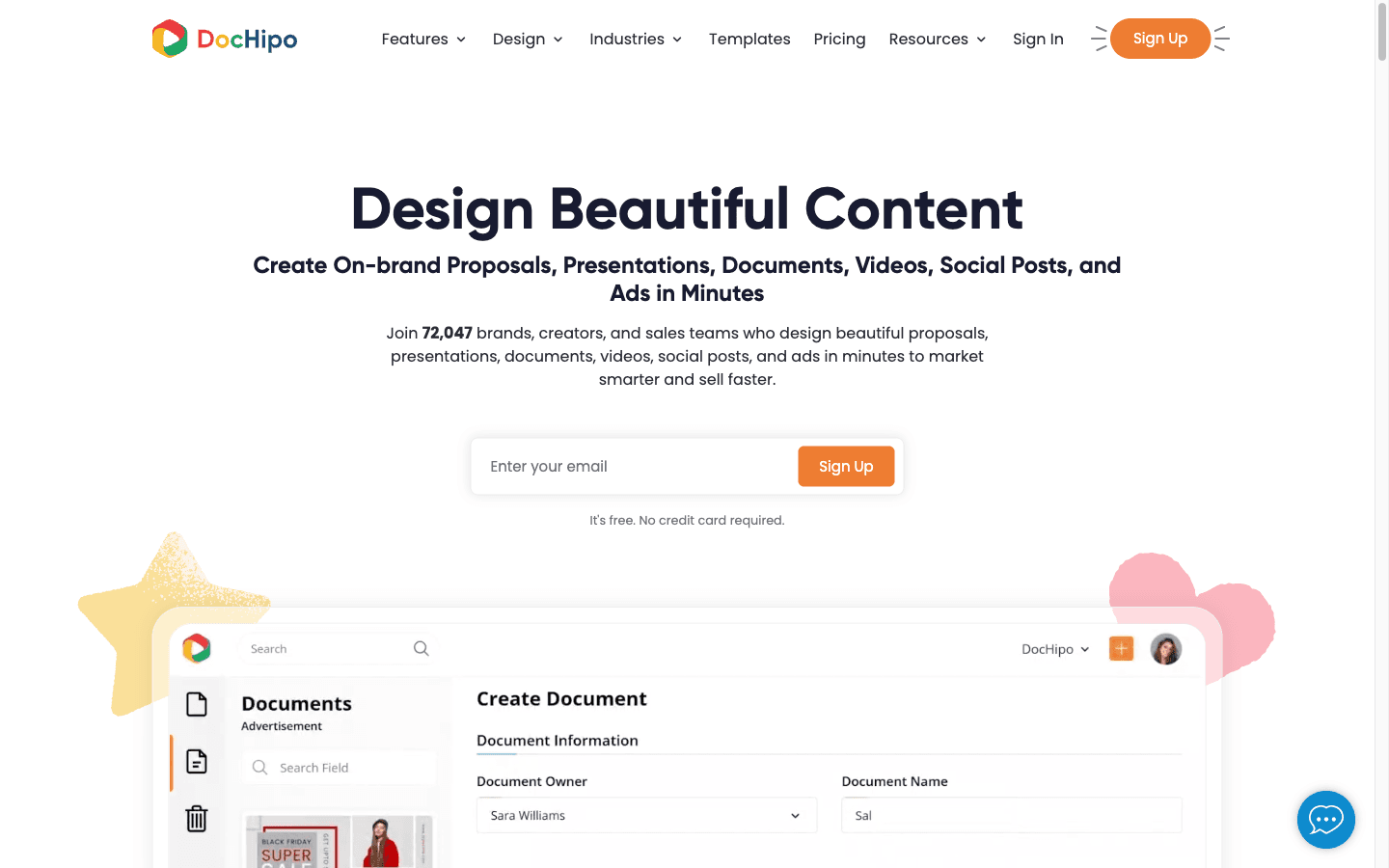
DocHipo is proposals-first: templates mapped to business documents, a drag-and-drop editor, and per-seat pricing under Canva's. Free covers unlimited drafting but caps you at 5 documents; Pro is $12/user/mo billed yearly ($15 monthly) with premium templates and unlimited documents; Pro Unlimited is $288/mo flat ($360 monthly) for unlimited users — a team price that beats per-seat math beyond roughly 24 people. The catch is proof quality: G2 shows 4.6 but from four reviews (three incentive-sourced — G2 itself says the sample is too small for business decisions); Capterra is stronger at 4.89 from 19; Trustpilot has no profile. Reviewers also flag real capability gaps: no numeric input for precise positioning, and no tablet app. For a marketer who lives in proposals, the free tier answers most doubts in an afternoon — use it.
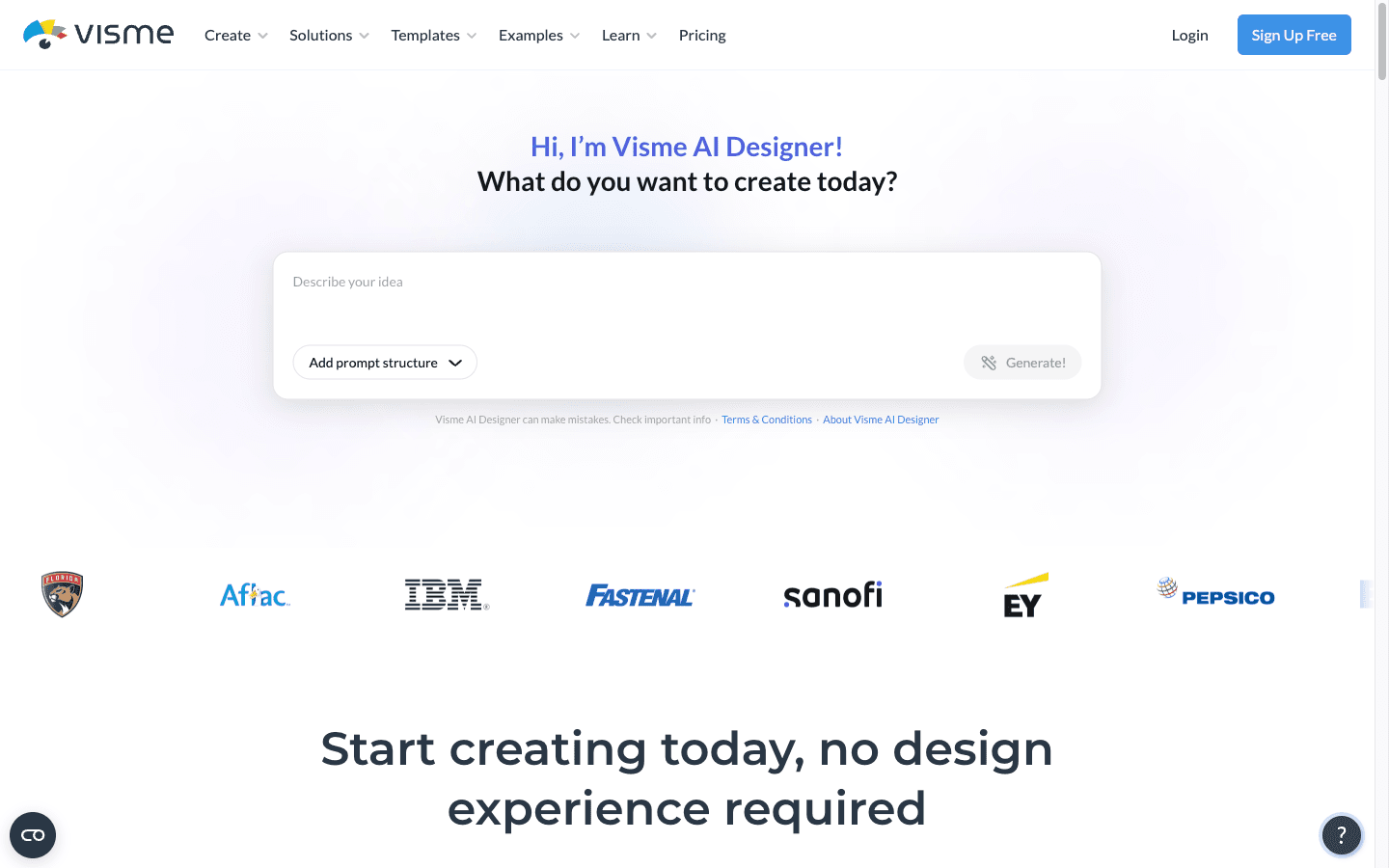
Visme is the brand-first suite: presentations, infographics, reports, and docs locked to your brand kit, with the one capability none of the cheap rivals copy — interactive output (hotspots, pop-ups, live-link publishing) with view analytics, which turns a "deck" into a trackable page. Free gives 10 AI credits/month with drafts you can't share or download; Starter is $12.25/seat/mo billed yearly ($147/yr) with 200 credits and downloads; Business is $24.75/seat/mo ($297/yr) with 500 credits and MP4/GIF/PPTx/HTML5 export; Enterprise adds approvals and unlimited credits. The review record splits by platform in a way worth understanding: G2 4.5 from 510 reviews (many seller-invited) against Trustpilot 3.1 from 258 with 32% one-star, clustered on billing and auto-renewal. The catch that decides for teams: reviewers report you can't edit your own work once the subscription lapses — your back catalog is hostage to an active plan. Budget the seat ladder (per-user pricing compounds fast at Business tier) before rolling it out company-wide.
AI photoshoots and photo restoration: the credit-meter corner
Photo AI Studio ($19/mo, roughly 50 images) generates photoshoots from one selfie on a credit meter; Palette ($72/year, credits from $0.15) colorizes black-and-white photos without touching your original. Both meter in credits, and both have catch-level trust issues in opposite directions.
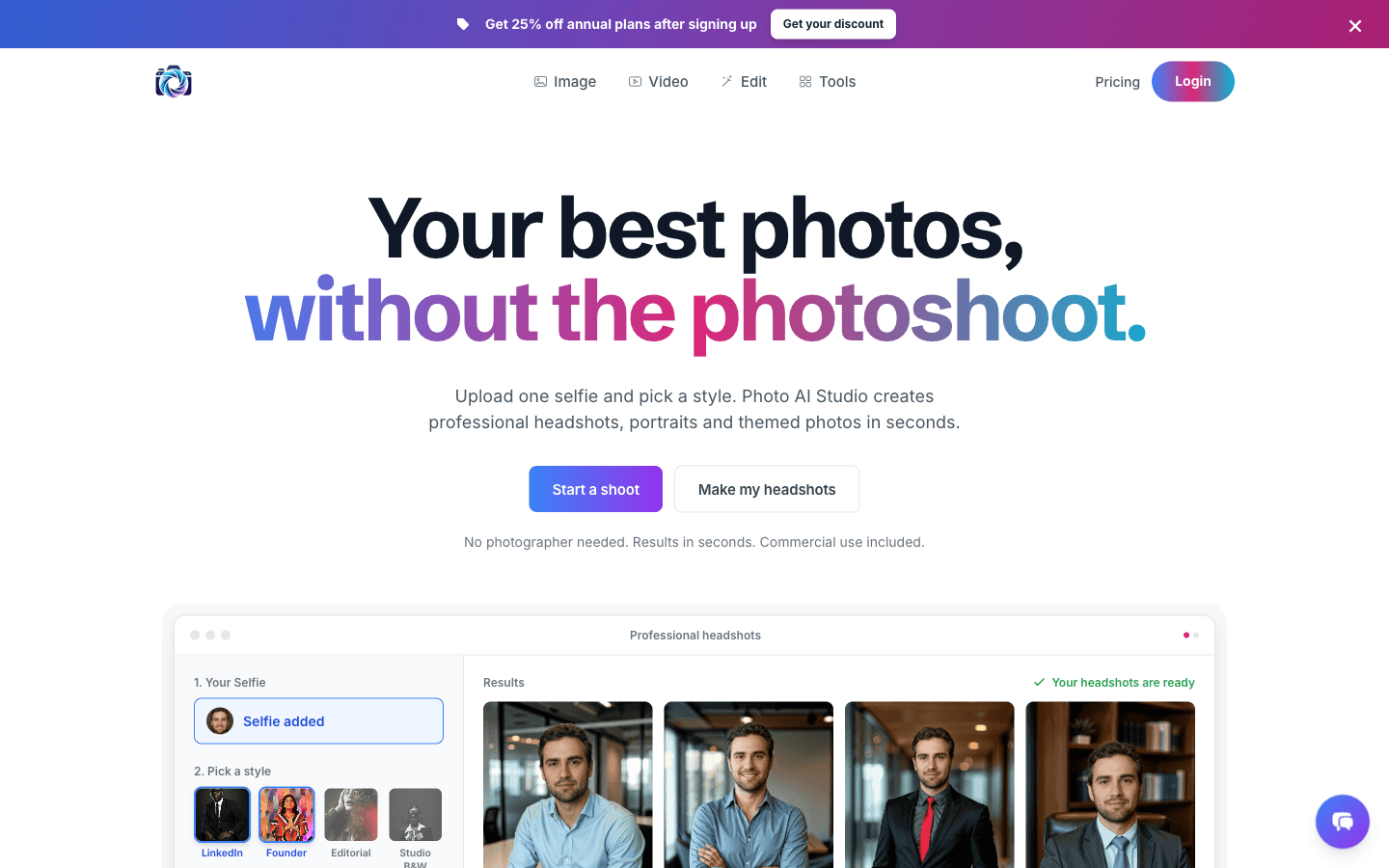
Photo AI Studio by CATIO APPS turns a selfie into a trained face model, then renders photoshoots: Basic is $19/monthly for 3,000 credits (~50 images), one face model, HD output, and a commercial license; Pro is $39/monthly for ~125 images, three face models, 2K, and 30-second AI video; Premium is $79/monthly for ~333 images, ten face models, 4K plus RAW, and 2-minute video. The unit economics are the story: at ~$0.38 per render it's cheap — but keepers run 3–5× renders, so budget $1–2 per usable photo before you compare against a $200 studio session. The trust record needs a paragraph: the pricing page badge says "14-day refund guarantee" while the refund policy page says refunds only under four conditions that contradict it; a reviewer documents a trial that converted with zero credits and no visible cancel option; and the on-site widget shows "4.9 · Trustpilot" while the live profile reads 3.9 from 127 reviews (23% one-star, replies to 90% of negatives). The affiliate signup page is inactive as of October 2026 — we feature this tool with zero commission attached, which is exactly how its record deserves to be featured.
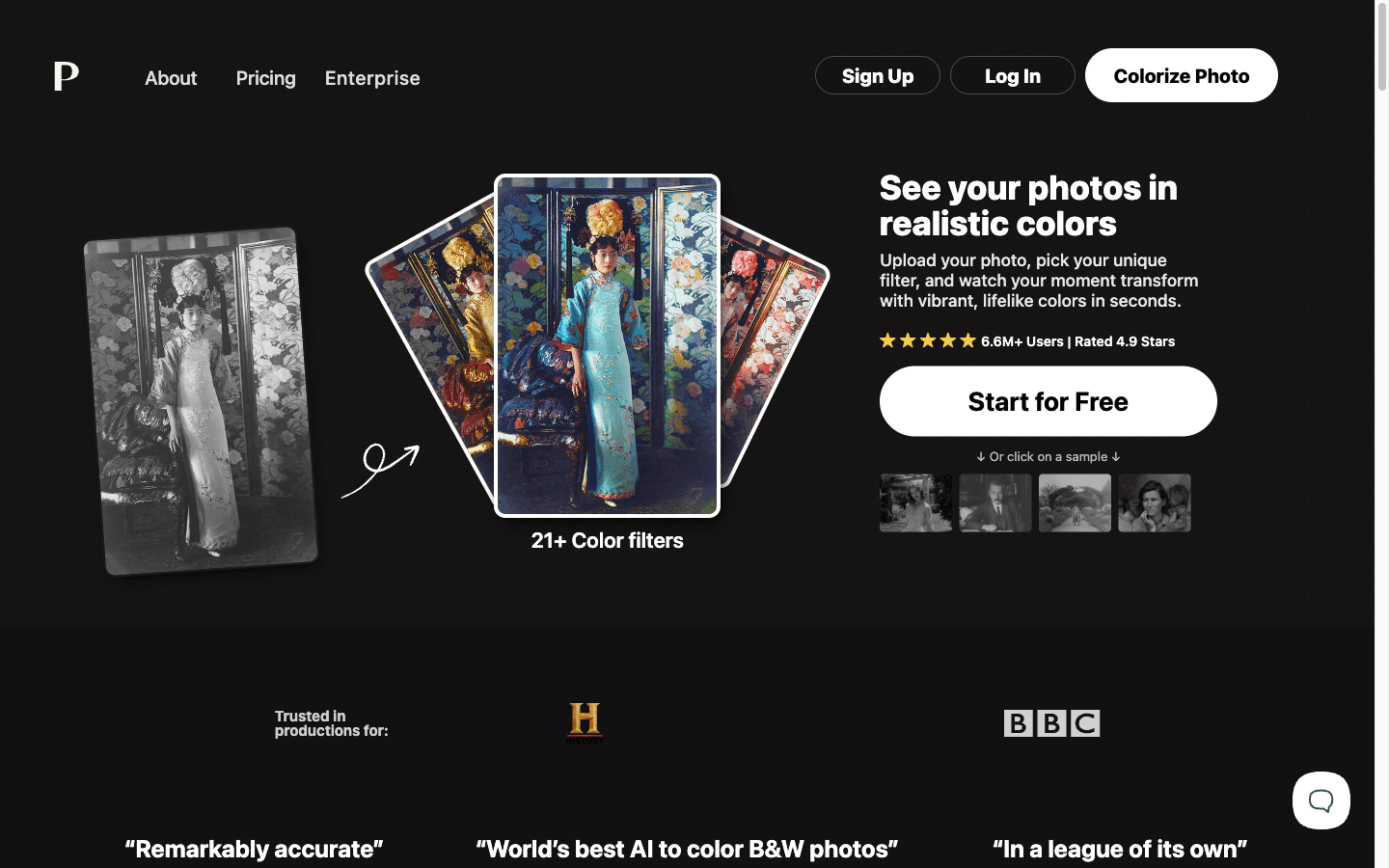
Palette does one thing with unusual care: AI colorization of black-and-white photos, with 21+ filters, text-prompt color control, and — the detail that matters for archivists — your original file stays intact. Free trial is one credit with watermarked, lower-res previews; the subscription is $72/year ("$6/month") for 480 credits, which works out to $0.15 per photo; the pay-once option is $49 for 75 credits at $0.65 each. The catch is the strangest on this list: there is no independent review footprint anywhere — no Trustpilot profile, no G2 page (the G2 "palette" slug belongs to a different product), no AlternativeTo listing — while the site claims 4.9★ from 6.6 million users, which nothing auditable supports. The product's job is small and demoable, the free credit answers quality questions in two minutes, and the $72/year price is the lowest commitment in this roundup. Judge it on your own photos; nobody else's reviews will help you.
Interior and real estate staging: the KD 44 niche
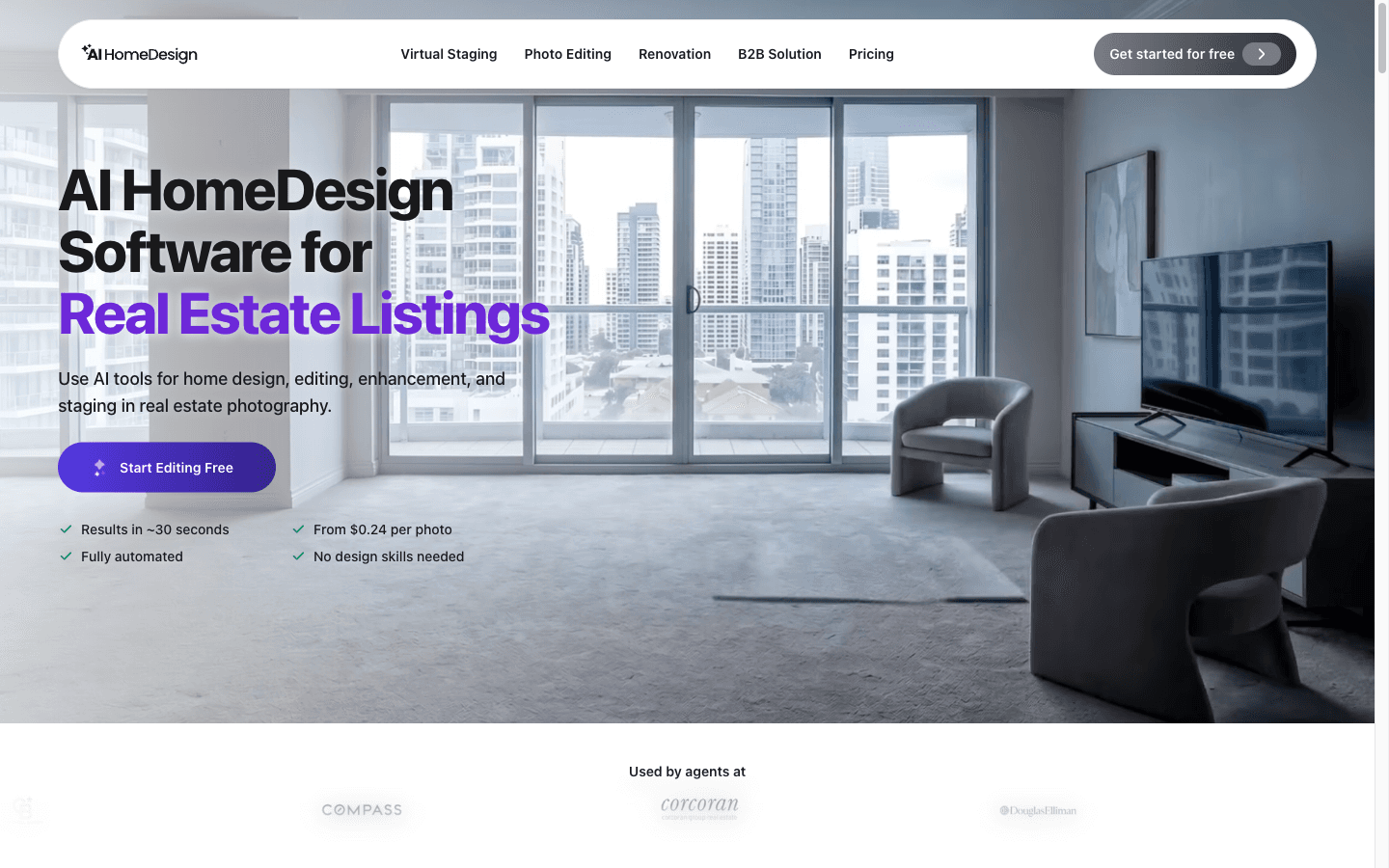
AI HomeDesign is the price floor in per-photo virtual staging — $0.24–0.63 per finished image from $19/mo — which is why "best ai interior design tools" pulls 390 searches a month. The catch is the roughest review record in this roundup: Trustpilot 2.7, with physical-accuracy failures as the recurring theme.
AI HomeDesign stages empty rooms, refurnishes existing ones, and generates listing enhancement — per-photo pricing that undercuts every human staging service by an order of magnitude. Pro is $19/mo billed yearly ($35 monthly) for 30 photos ($0.63 each); Pro Plus is $29/$59 for 80 photos ($0.36); Enterprise starts at $49/$99 for 200+ photos at $0.24 each, scaling to a $245/mo tier of 1,000 photos. Rollover is yearly-plans-only, and there's no API below Enterprise. The review record demands a careful read: Trustpilot sits at 2.7 from 47 reviews — but only 4 arrived in the last 12 months, 58% are five-star, and part of the negative cluster targets a similarly named company (HomeDesigns AI, a different vendor entirely — check the domain before you judge). The legit complaints describe physical-accuracy failures: floating objects, artwork wrapping wrongly around walls, item removal deleting unrelated furniture. First-time subscribers can get a full refund within 7 days if they've made 3 or fewer generations — which is exactly enough to test your own rooms. G2's 4.75 is from two reviews; we cite it for the record, not as signal. For agents staging listings at volume, the price-per-photo still beats every alternative — go in testing accuracy on your own inventory first.
Customer journey mapping: the UX-research specialist
UXPressia at $36/user/mo is the journey-map-first platform — structured CJM/persona/blueprint formats rather than a blank canvas — with a genuinely usable free tier. The catch: per-seat pricing compounds at the $95 Business tier, and the review base is frozen in time.
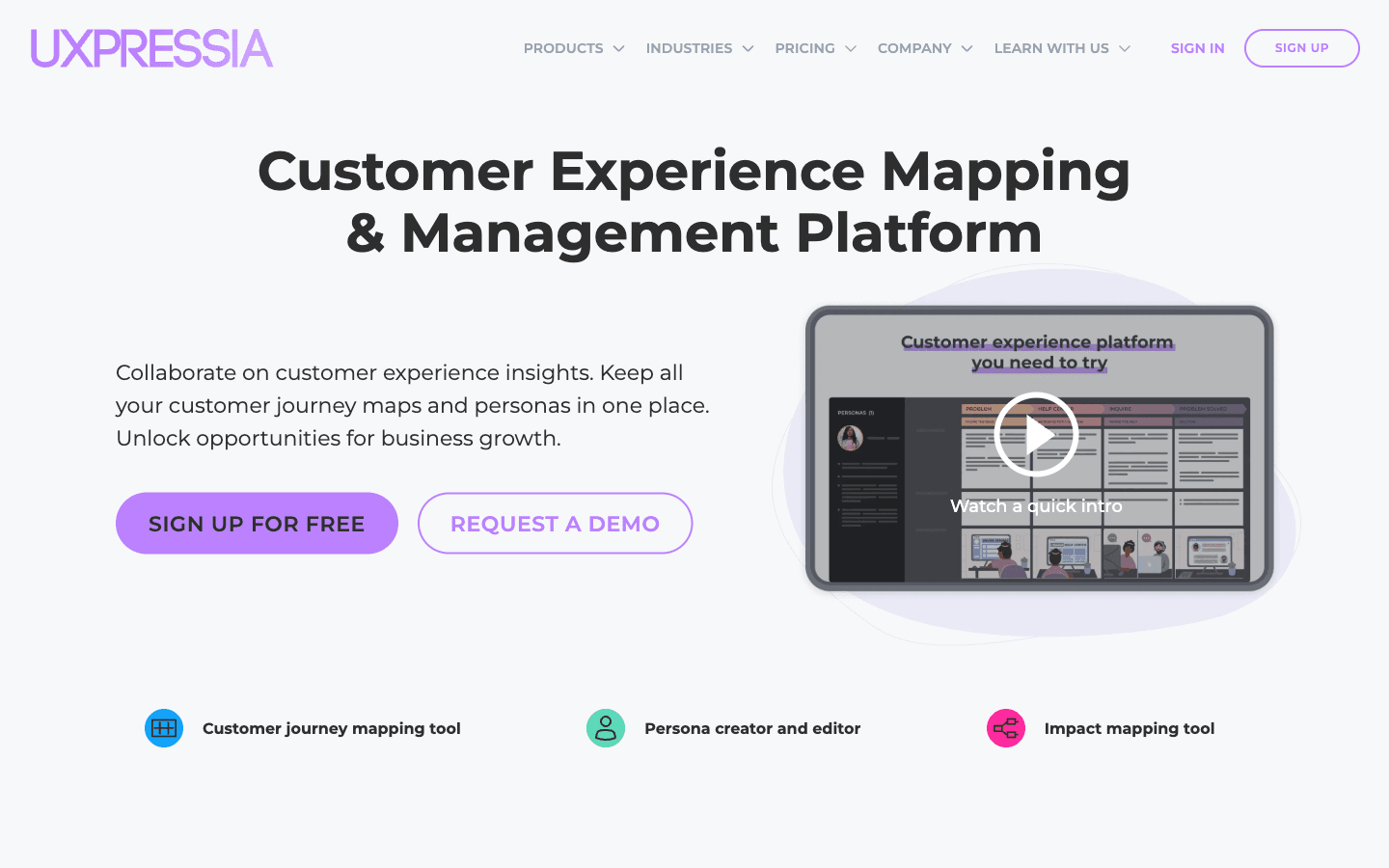
UXPressia gives journey maps, personas, and impact maps their own structured formats with templates, multiple-persona views, and an export ladder that's unusually complete: PDF/CSV at Pro, PPTX with branding and team library at Business, SSO and IP whitelisting at Enterprise. Free covers 3 maps, 3 personas, and 3 impact maps with PNG-only export — enough for a real pilot, not for a team library. Pro is $36/user/mo (G2 lists $35.98); Business is $95/user/mo and is where teams realistically land once they need shared libraries. Review scores are solid but stale: G2 4.5 from 37 reviews, Trustpilot 4.6 from 37 — with zero Trustpilot reviews in the last 12 months, and on-site widgets ("4.8 (78)", "4.5 (22)") matching no platform we checked. The catches: G2 cons tags include Integration Issues (no native Figma/Dovetail embeds below Business), and one free-tier wall bites fast — the free plan's export is watermarked PNG. For CX teams doing journey work quarterly, that free tier may genuinely be all you need.
Ad operations and design protection: the two unglamorous picks
Adpiler ($39/mo yearly) solves the display-ad approval loop — share banner sets as one link, previewed on real websites — and Remove.tech (from $99/mo) takes down pirated copies of creative work. Neither is a "design" tool in the render sense; both are where design work goes to survive contact with clients and the internet.
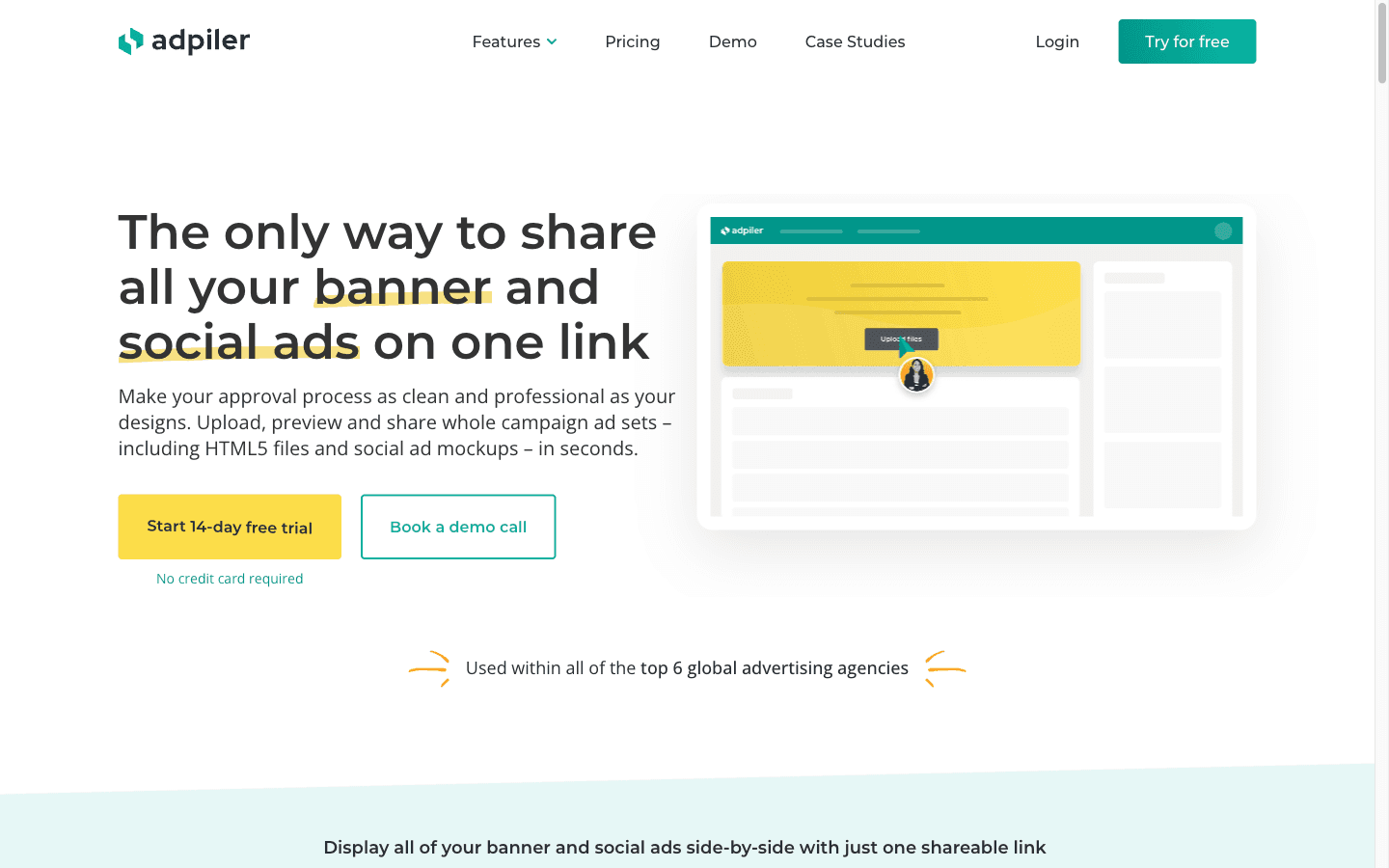
Adpiler is agency plumbing: upload a banner set, get one shareable link where stakeholders preview every format on a real webpage context, leave comments, and approve — ending the screenshot-in-Slack loop. Small is $49/mo ($39 billed annually) for 10 active ads; Medium is $99/$79 for 50; Large is $149/$119 for 100; Extra Large is $249/$199 for 200, all with unlimited white-label on Pro tiers. The catch is proof, again: G2 shows 4.5 from exactly one review dated July 2019 (G2's own page says there aren't enough reviews to score), no Trustpilot profile, Product Hunt 5.0 from two reviews. Seven-year-old single reviews describe a different internet. The job is narrow and the trial answers fit fast — evaluate it as plumbing, not as a platform bet.
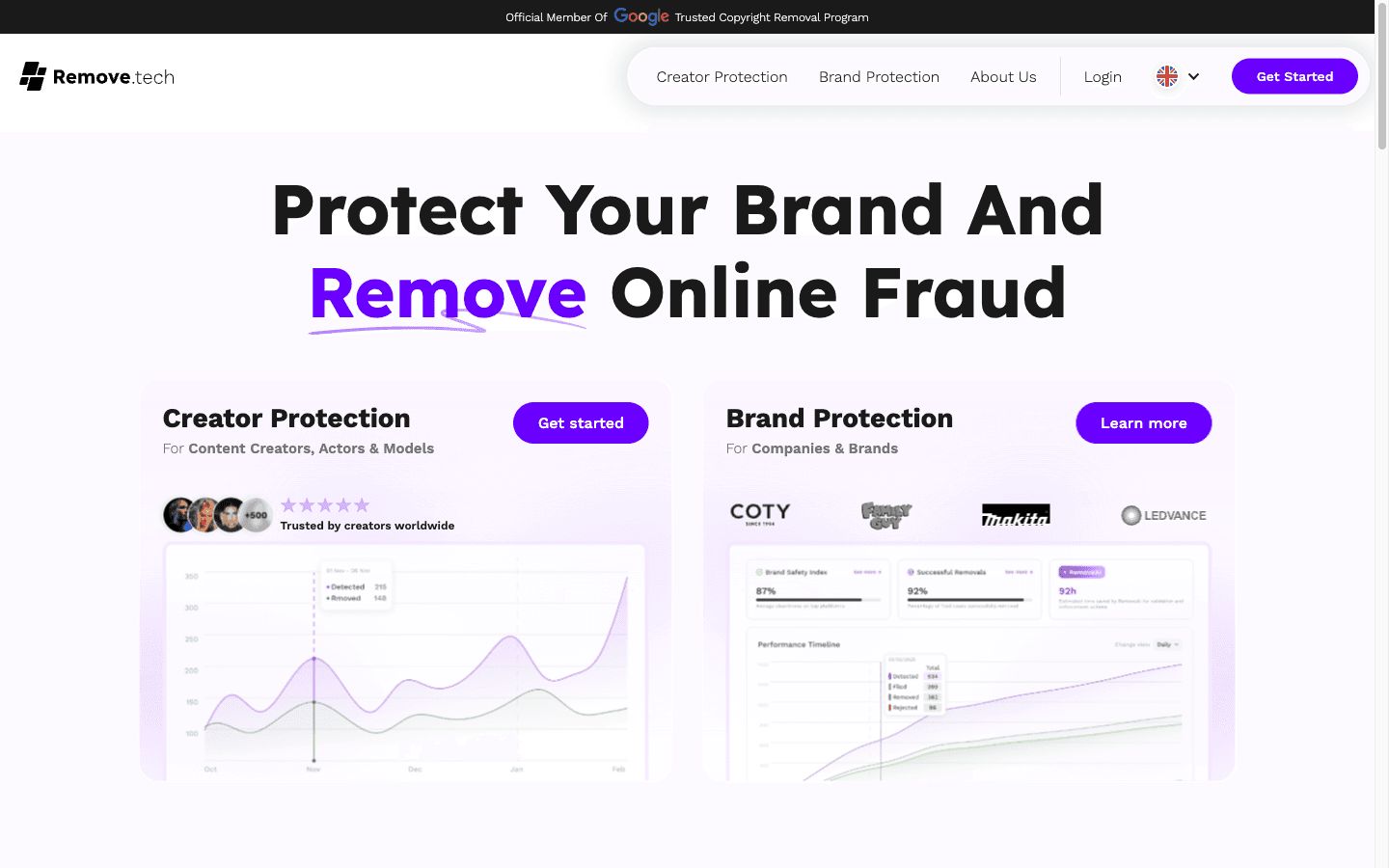
Remove.tech protects creative work after publication: AI web scanning for stolen content, Google search/image removal, social media takedowns, and at higher tiers deepfake and Telegram removal — as a subscription. Starter is $99/creator/mo (basic scanning, Google removal, unlimited takedowns, single region); Basic is $199/mo adding social and host removals across 5 regions; Advanced is $249/mo adding deepfake/AI removal with a dedicated manager; Premium is $399/mo adding Telegram removal (typically 10–60 days); agencies negotiate from $99. Trustpilot is the strongest signal here: 4.8 from 69 reviews, 96% five-star, with reviewers reporting leaked content gone within days; it's a Google Trusted Copyright Removal Program member. The catches: there is no self-serve cancellation button (per the most detailed critical review, updated September 2025), and only 3 reviews landed in the last 12 months on a small base. For creators whose work gets scraped — photography, courses, design portfolios — it's the only tool in this roundup whose output is a takedown notice rather than an image.
What a working AI design stack actually costs
one tool per design job keeps a small team under $100/month; the per-seat suites are where bills multiply. Verified October 2026:
| Design job | Tool | Steady state |
|---|---|---|
| Test every tool first | All eight free tiers/trials | $0/mo |
| Solo marketer, docs + decks | DocHipo Pro | $12/mo (yearly) |
| Brand team of 3, interactive output | Visme Starter × 3 | $37/mo (yearly) |
| Ecommerce product shots | Photo AI Studio Basic | $19/mo (~50 renders) |
| Photo restoration side work | Palette subscription | $6/mo (annual) |
| Real estate staging, 30 listings/mo | AI HomeDesign Pro | $19/mo (yearly) |
| CX team of 2 mapping quarterly | UXPressia Free + Pro when needed | $0–36/mo |
| Agency ad approvals | Adpiler Medium | $79/mo (annual) |
The pattern worth naming: the per-seat suites (Visme, DocHipo, UXPressia) are the only rows where headcount changes the bill, and they're also the rows with 500+ review records to de-risk the decision. The credit-meter tools (Photo AI Studio, Palette, AI HomeDesign) price per output — model your keeper rate, not your render rate.
Where AI design tools still break in 2026
the failure modes are billing hygiene, physical accuracy, and hostage archives — not model quality. Three checks before any annual plan.
- Check the refund policy against the badge. Photo AI Studio's on-site guarantee contradicts its own policy page; Visme reviewers describe buried cancellation; Remove.tech has no self-serve cancel. In this category more than any other we've audited, the checkout terms are part of the product — read the refund page, not the badge, before annual commitments.
- Physical accuracy is the unsolved problem. AI HomeDesign's documented failures (floating furniture, wrapping artwork) apply to every generative staging/render tool to some degree. The working pattern: render, then inspect edges and physics per image — budget review time per photo, because the AI doesn't know which wall is load-bearing.
- Thin review bases are the norm, and some are inherited. Adpiler's G2 review is from 2019, Palette has no independent footprint, AI HomeDesign's negative cluster partly targets a name-twin competitor. Verify the domain, check review recency, and let the free tier answer what reviews can't.
Decision framework
| Your design job | Pick | Verified entry price | The catch that decides |
|---|---|---|---|
| Presentations on a budget | DocHipo | $12/seat/mo yearly | 4-review G2 base; no precision controls |
| Brand suite with analytics | Visme | $12.25/seat/mo yearly | Archive locked if plan lapses; TP 3.1 billing record |
| AI photoshoots from selfies | Photo AI Studio | $19/mo (~50 renders) | Refund badge ≠ policy; widget says 4.9, live is 3.9 |
| Colorize archives | Palette | $72/yr (480 credits) | Zero independent review footprint |
| Virtual staging at volume | AI HomeDesign | $19/mo yearly (30 photos) | TP 2.7 — accuracy failures; test on own rooms |
| Journey mapping | UXPressia | $36/user/mo | Per-seat compounding; stale review base |
| Display-ad approvals | Adpiler | $39/mo annual | One G2 review, from 2019 |
| Takedown for stolen work | Remove.tech | $99/creator/mo | No self-serve cancellation |
FAQ
What are the best AI design tools in 2026?
Sorted by job: Visme ($12.25/seat/mo yearly) for brand-consistent business visuals with interactive output, DocHipo ($12/seat/mo yearly) for presentations and proposals, Photo AI Studio ($19/mo) for AI photoshoots, Palette ($72/yr) for photo colorization, AI HomeDesign ($19/mo yearly) for interior staging, UXPressia ($36/user/mo) for journey mapping, and Adpiler ($39/mo annual) for ad approvals. There's no single winner because rendering a photo, staging a room, and getting a banner approved are different products with different meters.
What are the best AI tools for presentation design?
DocHipo and Visme are the strongest verified pair. DocHipo wins on price ($12/seat/mo yearly, proposals-first templates) with a thin review record; Visme wins on capability — brand kits, MP4/GIF/PPTx export, and interactive published pages with view analytics that plain decks can't match — at $12.25/seat/mo yearly. The honest deciding factor: if your decks need to prove engagement to stakeholders, Visme's analytics are unique in this price class; if they need to get written fast, DocHipo's free tier already answers most of it.
What are the best AI interior design tools for real estate?
AI HomeDesign is the verified price floor: $0.24–0.63 per finished staged photo ($19–49/mo depending on volume), covering virtual staging, refurnishing, and listing enhancement. The trade-off is accuracy — Trustpilot reviews document floating furniture and object-removal errors, so inspect every render's edges before it reaches a listing. For a 30-listings-per-month operation, the $19/mo Pro plan undercuts human staging by roughly 95%, which is why the niche draws 390 searches a month despite the record.
How much do AI design tools cost per month?
Verified October 2026: DocHipo $12/seat, Visme $12.25/seat, AI HomeDesign $19, Photo AI Studio $19, UXPressia $36/user, Adpiler $39, Remove.tech $99 — plus Palette at $72/year and free tiers on nearly everything. A solo marketer runs $12–31/month; a three-person brand team lands around $37–75/month; credit-meter tools (Photo AI Studio, Palette) price per output, so your keeper rate — not the sticker — decides the real cost.
Are AI-generated design images safe for commercial use?
License terms vary by plan, and this is where the cheap tiers hide their catch: Photo AI Studio includes a commercial license starting from its $19 Basic plan, but check each tool's terms before client or advertising use — ad platforms have rejected AI imagery for policy reasons unrelated to copyright. For real estate staging (AI HomeDesign), the output depicts a property that must still match reality at walkthrough; disclosing virtual staging is both an MLS requirement in many markets and the honest move with buyers.
Which AI design tools have free plans?
Almost all of them, and most are genuinely useful: DocHipo (unlimited drafts, 5 documents), Visme (10 AI credits, drafts only), UXPressia (3 maps, 3 personas), Palette (1 trial credit), AI HomeDesign (first photos free, no card), Photo AI Studio (trial credits), Adpiler (trial), and Mixo-style launch validation if you're pre-product. The pattern: free tiers answer quality questions in minutes; what they don't answer is commercial licensing and export rights — those start at the first paid tier everywhere on this list.
Related Guides
- Best AI Video Tools (2026) — the motion half of the visual stack
- Best AI Advertising Tools (2026) — where design work meets campaign ops
- Best AI Ecommerce Tools (2026) — product imagery in the full store stack
- AI Tool Comparisons Hub — every head-to-head on the site
- Browse all AI design tools in the directory
Last updated: October 27, 2026. Pricing verified October 26–27, 2026 from vendor pricing pages, both billing toggles where shown; ratings reflect documented strengths and failure modes from our full tool pages, not hands-on renders.
Disclosure: This article contains affiliate links. Most tools above have active affiliate programs, with commissions verified from signup pages October 2026: Visme 25% recurring (12 months), DocHipo 20% recurring, Palette 30% (first 18 months), AI HomeDesign 30%, UXPressia 15%, Adpiler 30% (first 12 months), Remove.tech 10% (first 6 payments). Photo AI Studio's affiliate signup page was inactive when we verified — it's featured here on its record, not its commission. We also recommend tools with no affiliate program when they're the best fit. Pricing can change — verify at checkout.